

Southeast Asia Online Travel Booking System Development

Building Digital Resilience for the Tourism Ecosystem

Category
Language
Region
B2CDevelopmentUI/UX Design
Mandarin (Chinese)EnglishMalay
Malaysia
Category:
B2CDevelopmentUI/UX Design
Language:
Mandarin (Chinese)EnglishMalay
Region:
Malaysia

Background

The client is a tourism aggregator on a Southeast Asian island, where accommodation is dominated by small resorts and homestays. These operators were heavily dependent on international online travel agencies (OTAs), sacrificing margins to commission fees while retaining little control over pricing or customer data.

The island's natural combination of rooms, dining, and activities: diving, snorkeling, and more, was well-suited for bundled, all-inclusive packages. TMO Group was engaged to build the entire digital ecosystem from the ground up: strategy consulting, UI/UX design, and multi-vendor travel booking system development.
Challenges

As a resource aggregator, the client faced two primary challenges:

Limited digital readiness among small vendors. Operators were accustomed to running their businesses offline. The platform needed to convert highly personalized, non-standardized offline packages into a simple online flow, one that operators could manage entirely from a mobile phone.

A sales model far more complex than standard hotel bookings. Each package bundles accommodation, dining, and activities, with pricing shaped by room type, occupancy, children's ages, seasonality, and multi-room combinations. This created significant complexity at both the backend configuration and front-end UX level.

Service & Solution

This project represents far more than a standard development delivery; it is a holistic digital transformation solution tailored specifically for the Southeast Asian travel market. TMO consolidated the island's fragmented resources into unified, all-inclusive travel packages and followed a consult-first, design-second, build-in-stages approach. 

The result is a three-interface system: a traveler booking web app, an operator Android app, and a super admin dashboard, all powered by a shared multi-vendor API.

By transforming complex, non-standard offline operations into structured, high-value digital assets:

  • Resort Operators gained an independent direct-to-consumer sales channel and absolute pricing autonomy.
  • Travelers received an intuitive booking experience optimized for local languages and native payment methods.
  • The Platform Operator secured a highly scalable, multi-vendor marketplace infrastructure, perfectly prepared for future expansion into new regions and broader business models.

Digital Strategy: Rebuilding the Business Model

TMO approached the project from a commercial strategy perspective, helping the client articulate what made the island's tourism offering genuinely distinctive, then structured a digital model around that. This meant untangling multi-tiered pricing rules, group travel configurations, and complex offline bundling logic, and translating them into a system flexible enough to scale as the business grows.

Empowering Small Vendors: The Operator App

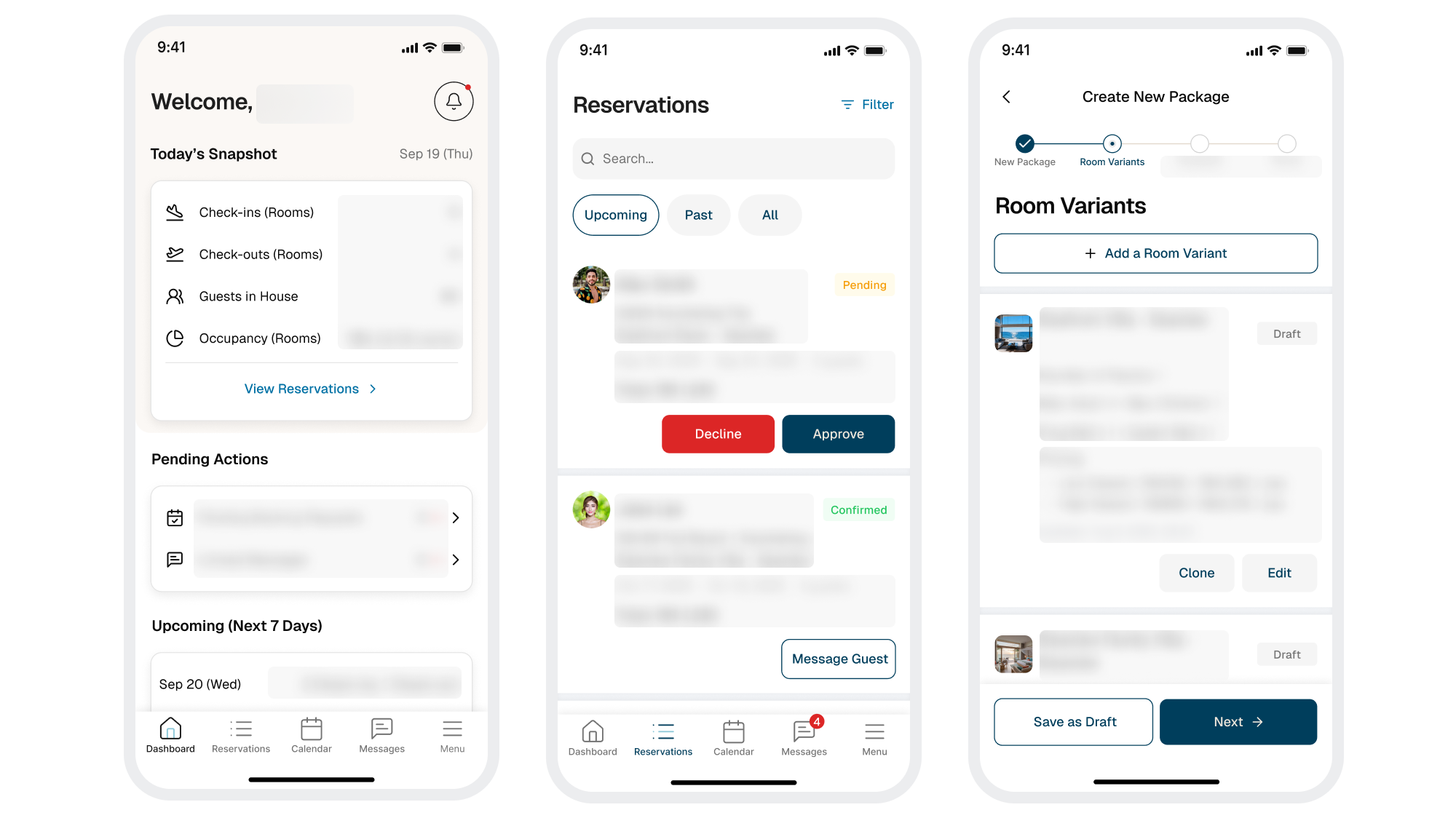
TMO built a dedicated Android native app for resort operators, converting complex business logic into a modular, mobile-friendly configuration experience. From their phone, operators can receive booking notifications, confirm or decline reservations, respond to inquiries, review sales data, and adjust pricing and availability in real time. For the first time, local small businesses have a digital channel of their own, moving from passive reliance on external platforms to active, independent day-to-day management with direct access to their guests.

Multi-Vendor API Architecture: Powering Complex Dynamic Rules

The traveler web app, operator app, and admin dashboard all run on a shared multi-vendor API architecture. At its core is a multi-dimensional rules engine designed to manage the dynamic variables common in island tourism: party size, adult-to-child ratios, check-in dates, and multi-room combinations for group travel. This architecture doesn't just solve today's complex order logic, it establishes scalable infrastructure that can accommodate new islands or business models in the future, without requiring a rebuild.

UX Strategy: Making Complex Package Booking Feel Simple

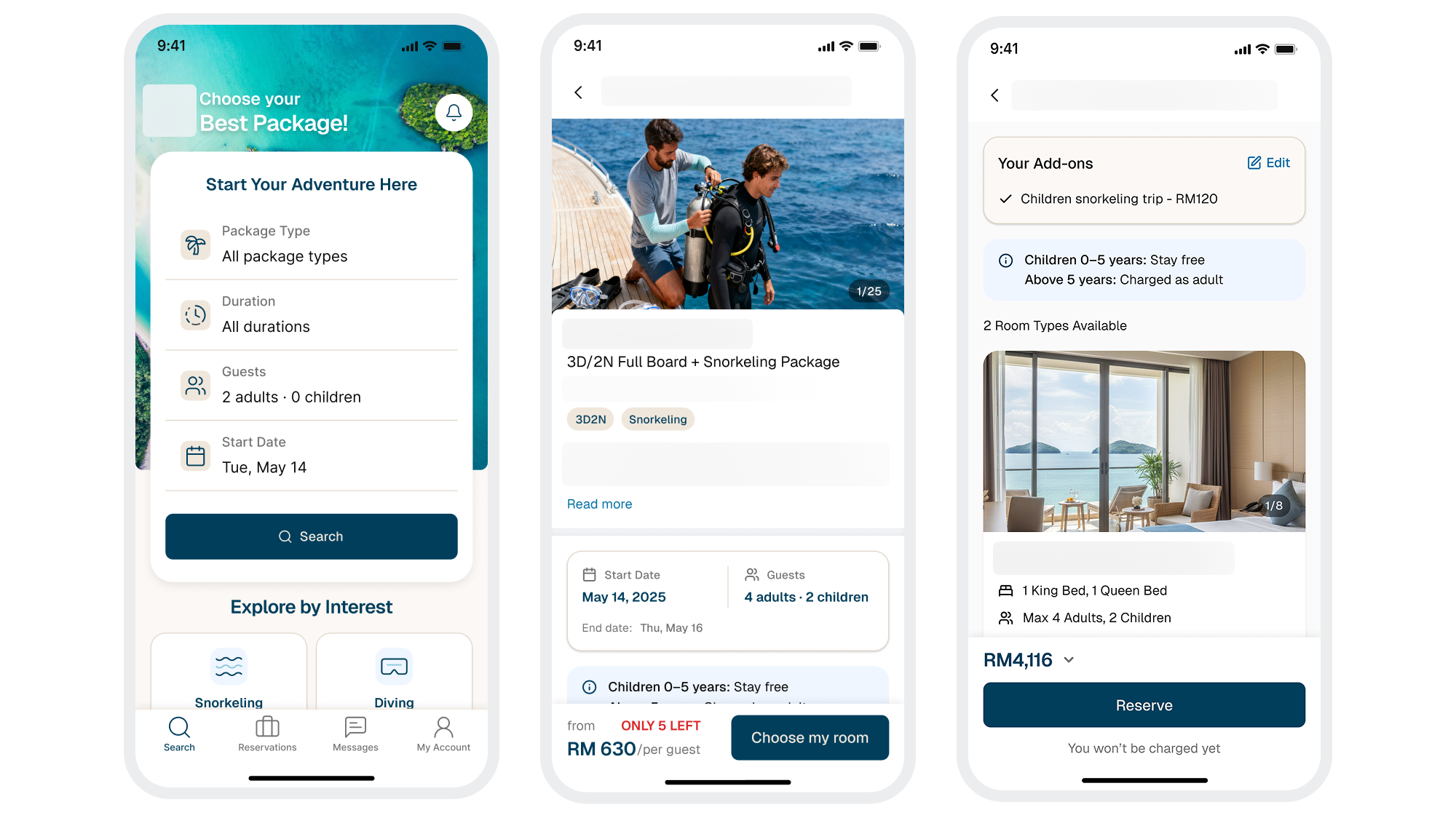
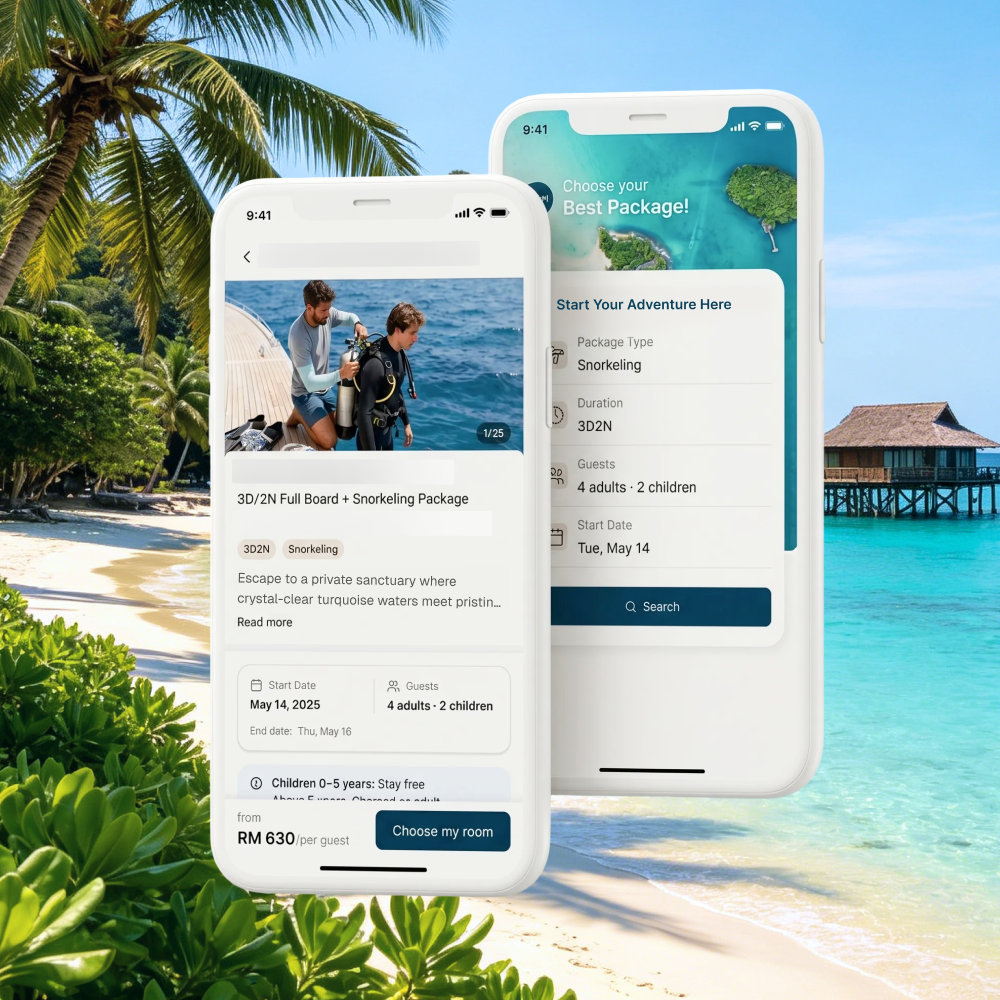
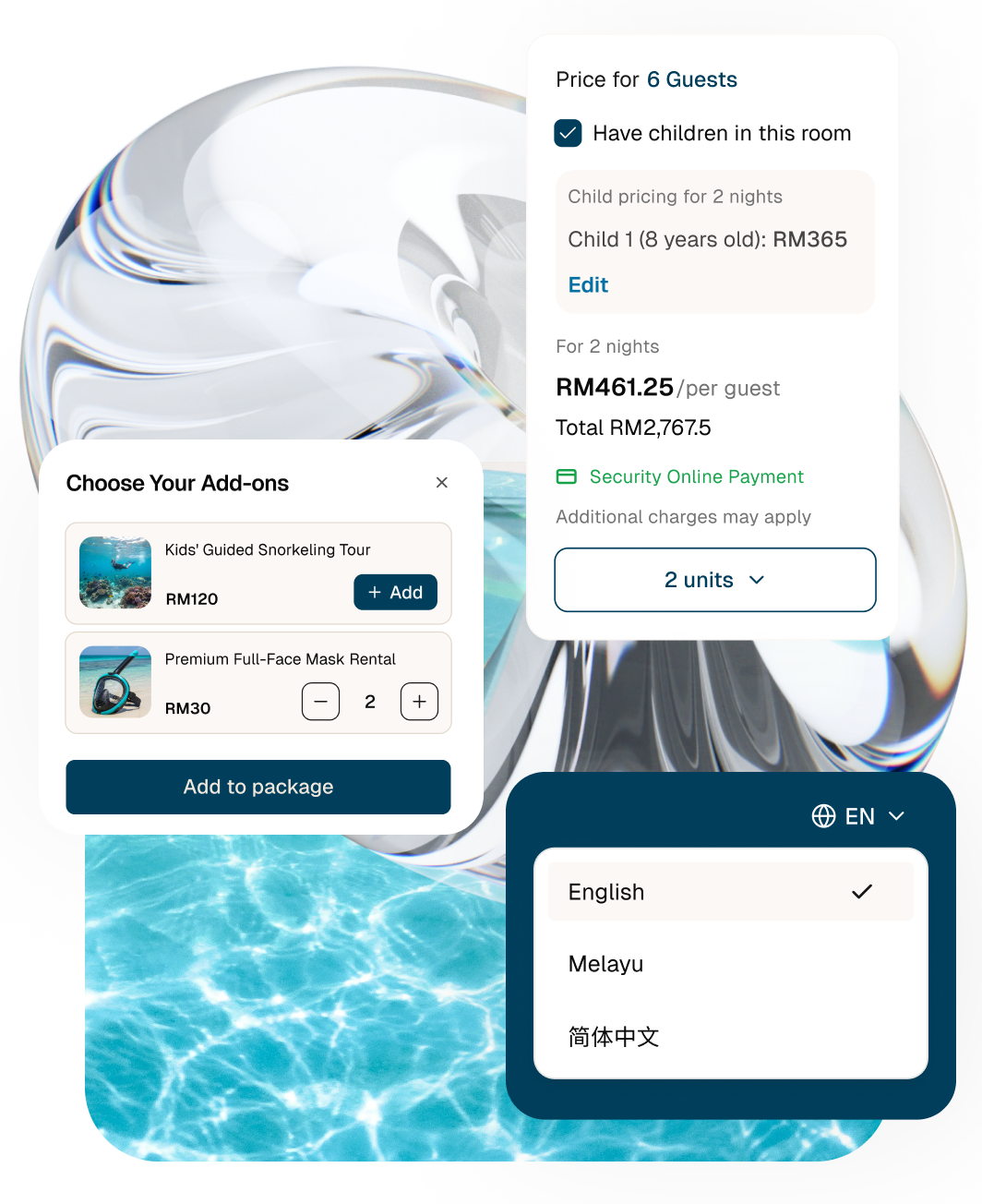
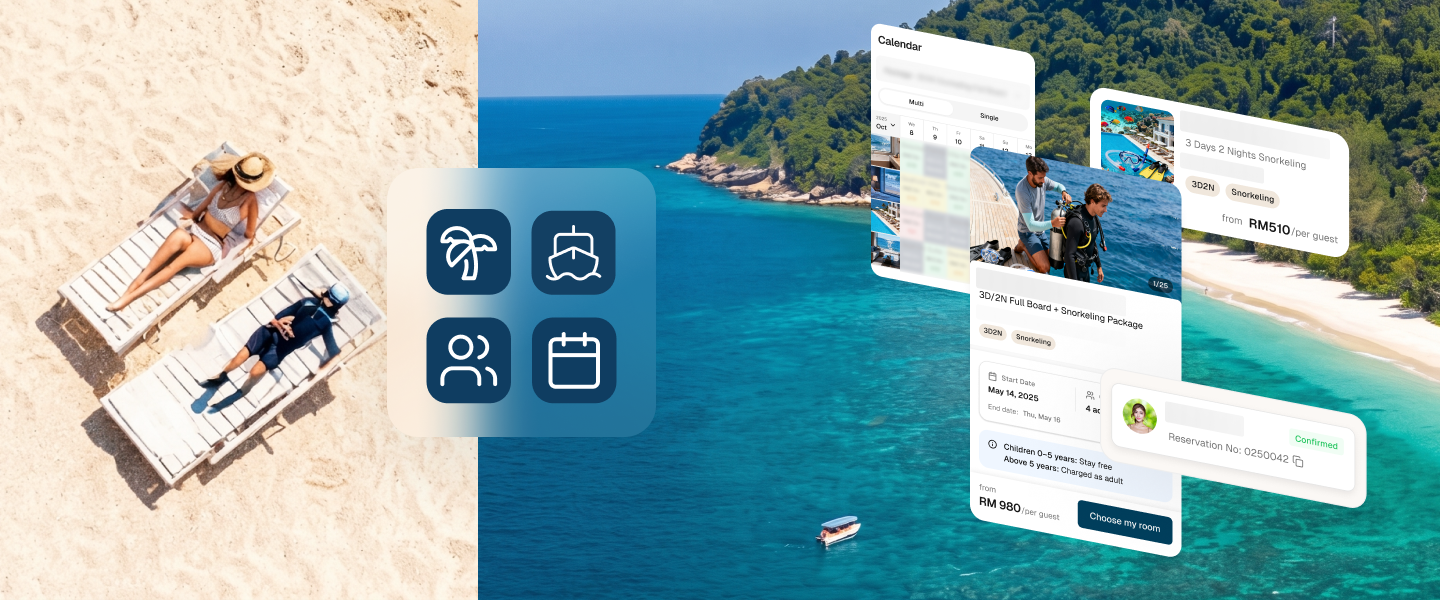
Because island packages bundle multiple non-standard services, travelers often find them difficult to navigate. The traveler web app addresses this by replacing long-form flows with a clear, step-by-step guided experience. Each screen focuses on a single decision, with card-based layouts that surface package highlights efficiently. Pricing updates in real time as travelers make selections, with full tax breakdowns visible throughout, reducing hesitation and accelerating conversion.

Deep Asian Market Localization: Language, Payments, and Commercial Rhythms

The platform natively supports English, Malay, and Simplified Chinese. Payment integration covers Visa/Mastercard, Alipay, WeChat Pay, iPay88, and eGHL, reflecting the genuine payment habits of the island's diverse traveler demographics. Pricing and seasonal configurations are built around local market realities, including the monsoon-driven seasonality that shapes demand patterns in the region. This depth of Asian market localization is one of TMO Group's core competitive advantages.

Design Showcase Section

Merchant App Design
Guest Web App Design

View more works

Let's Talk

Expand your Business with us
Get in touch