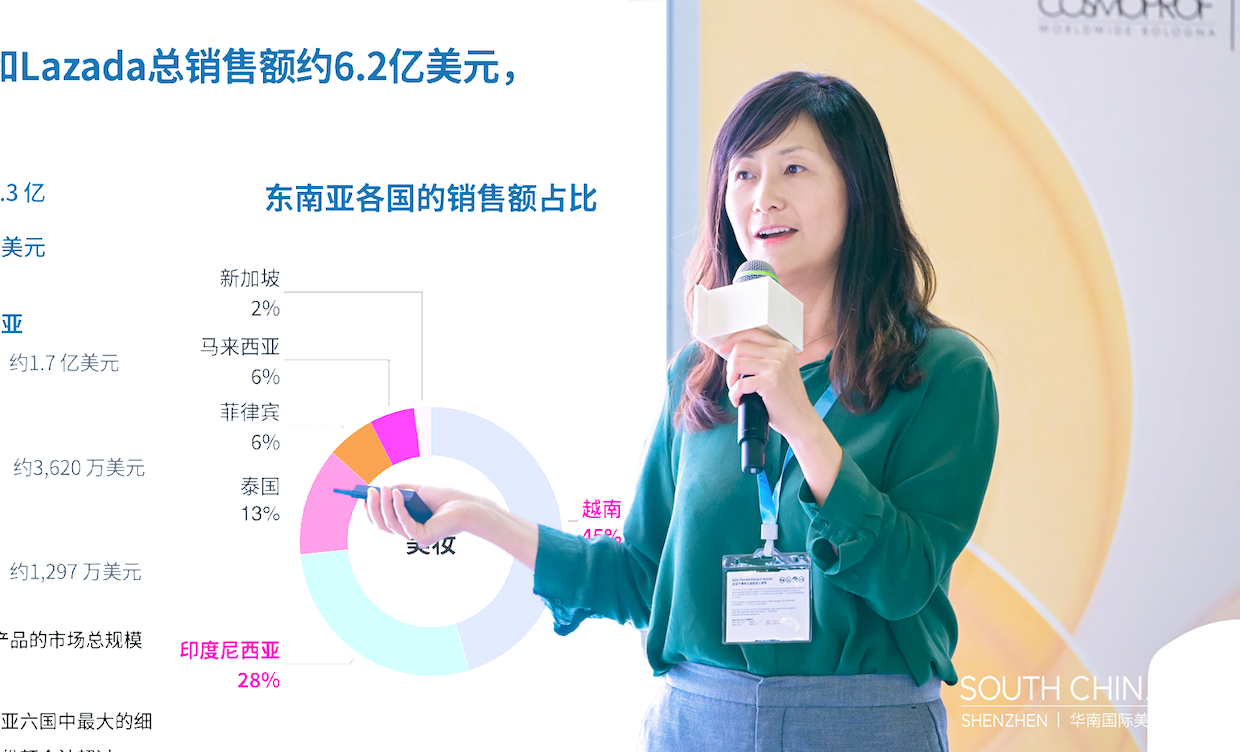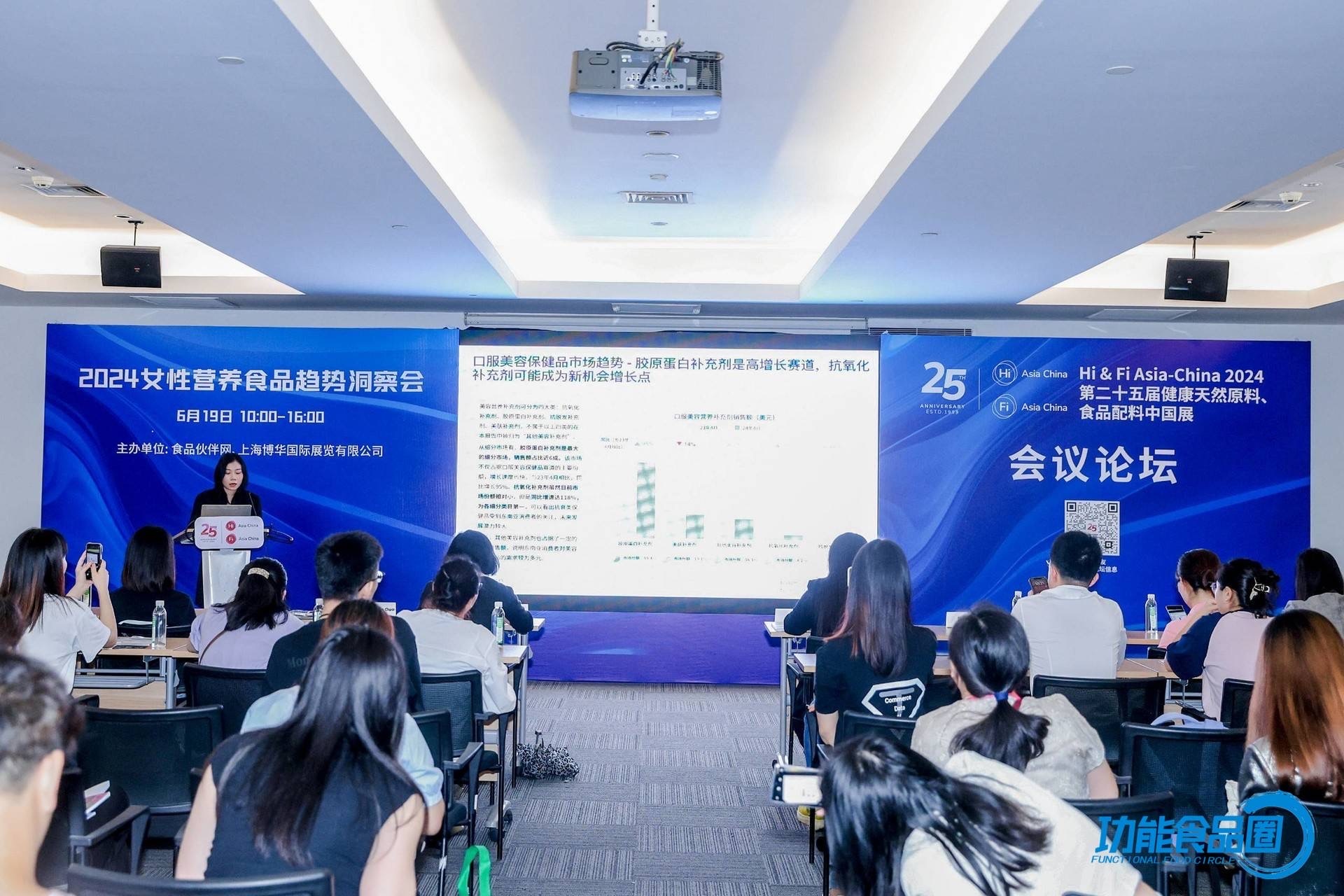



TMO Group Business Director Jing Zhou has contributed an expert column to the October 2026 Global Market Overview Issue of Nutrition Business Journal (NBJ), a leading U.S. publication covering the global nutrition and dietary supplement industry.
Published in the Expert Voices section, her article, "China and Korea nuances: Two different digital paths to trust," explores how consumer behavior, regulatory frameworks, and digital commerce environments shape market entry strategies for international nutrition and dietary supplement brands in China and South Korea.
Drawing on recent industry research and TMO Group's regional expertise, the column examines why these two digitally mature markets require distinct approaches to product positioning, consumer trust, and eCommerce localization.
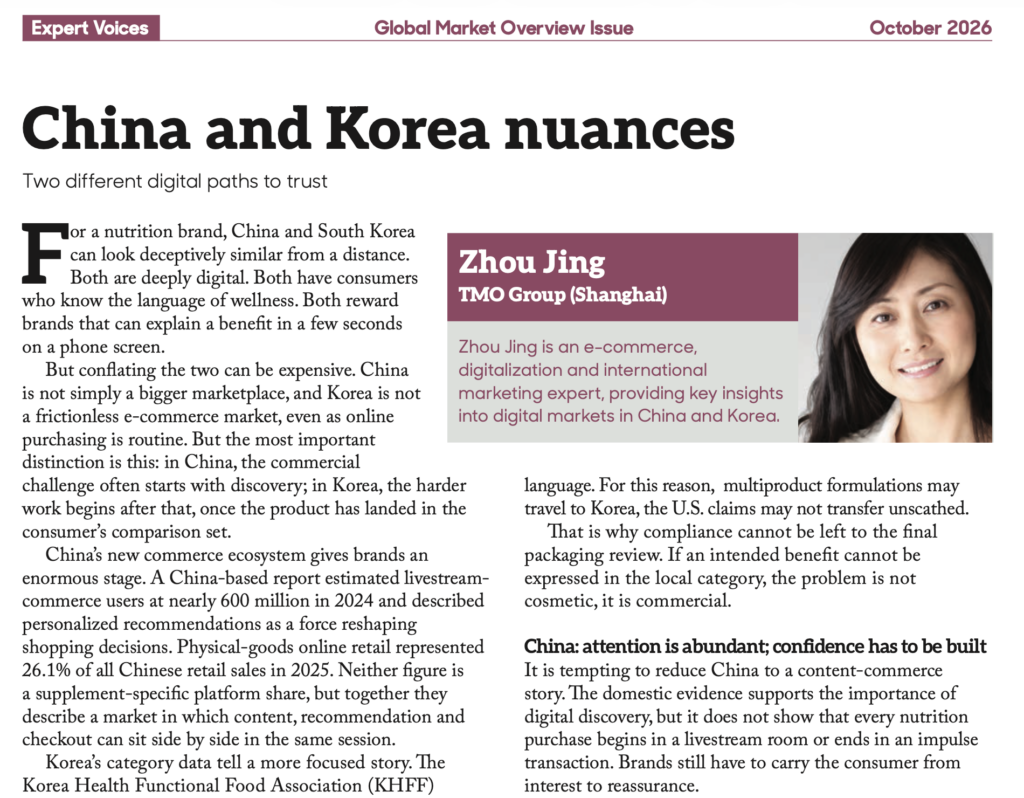
About Nutrition Business Journal
Founded in 1996, Nutrition Business Journal is an industry publication from New Hope Network, part of Informa Markets. NBJ publishes market intelligence, industry research, and analysis covering the global nutrition and dietary supplement sector, including market sizing, consumer trends, product categories, and distribution channels.
Its October 2026 Global Market Overview Issue examines regional nutrition markets, evolving consumer expectations, regulatory developments, and the commercial opportunities and challenges facing the industry.
Jing's contribution to this issue reflects TMO Group's expertise in Asian health supplement markets, cross-border eCommerce, and the digital strategies required for international brands entering the region:

China: Turning Digital Discovery into Consumer Trust
China's digital commerce ecosystem creates extensive opportunities for nutrition and supplement brands to reach consumers through social content, livestreaming, and personalized product recommendations.
According to the research cited in Jing's article, China's livestream commerce audience approached 600 million users in 2024, while online sales of physical goods accounted for 26.1% of total retail sales in 2025. Although these figures are not specific to dietary supplements, they illustrate the importance of digital discovery in China's broader retail environment.
Imported nutrition products also remain an important part of the market. Data from the China Chamber of Commerce for Import and Export of Medicines and Health Products shows that China's imports of nutrition and health food products reached US$3.976 billion in the first half of 2025, increasing 10.6% year over year. Vitamin imports grew by 38.9% during the same period.
However, the growing presence of imported products does not guarantee consumer preference for foreign brands.
As Jing explains, while content-driven commerce can generate substantial interest, supplement brands must establish credibility at the point where consumers transition from product discovery to purchase.
This requires clear and accessible information about ingredients, intended health benefits, regulatory registration or filing status, seller identity, and after-sales support. With Chinese regulators and consumers increasingly attentive to exaggerated health claims, compliant product communication is an essential part of building confidence.
For international brands, the challenge is therefore to connect digital visibility with trustworthy product information and a reliable purchasing experience.
South Korea: A Mature Market Where Consumers Research and Compare
South Korea's health functional food (HFF) market presents a different commercial environment, characterized by established online purchasing habits and consumers who actively compare products before making decisions.
According to the Korea Health Functional Food Association (KHFF), the country's HFF consumer market was estimated at KRW 5.9626 trillion in 2025. Its household survey found that 83.6% of households had purchased health functional foods during the previous year, while internet malls represented 71% of category purchasing by value.
More importantly, 89.8% of respondents reported researching product information before purchasing, with ingredient content, price, and brand trust among the leading comparison criteria.
This has significant implications for international brands entering the Korean supplement market.
Rather than relying primarily on product visibility or novelty, brands must demonstrate how their formulations, ingredient dosages, functional benefits, and pricing compare with established domestic alternatives.
Jing highlights that categories such as red ginseng, probiotics, multivitamins, and EPA/DHA oils already have well-established consumer reference points. International brands entering these categories need a clear value proposition that can withstand direct comparisons with familiar products.
Product information, credible functional claims, and transparent ingredient communication therefore play a central role in influencing purchasing decisions.
Regulatory Compliance Shapes Product Strategy in Both Markets
Beyond their differences in consumer behavior, China and South Korea each have regulatory frameworks that directly influence how supplement brands can position and market their products.
In China, health food products are subject to registration and filing requirements, while other wellness products may fall under different food classifications. These distinctions affect permissible health claims, product labeling, and routes to market.
South Korea's HFF framework places particular emphasis on recognized functional ingredients and dosages. Health claims must correspond to the functions permitted under the country's regulatory system, meaning that a product's existing U.S. marketing claims cannot necessarily be transferred directly to Korea.
Jing argues that regulatory considerations should be incorporated during product planning, rather than treated as a final packaging or labeling exercise. The ability to communicate a product's intended benefits influences its formulation, positioning, information architecture, and commercial viability in each market.
Key Recommendations for International Supplement Brands
While both markets require effective content marketing and digital commerce capabilities, the distinction lies in how brands convert consumer interest into purchasing confidence.
Jing's column highlights three considerations for international brands planning their expansion:
- Build market-specific consumer experiences. In China, prioritize the transition from content-driven discovery to product verification and trust. In South Korea, focus on supporting informed comparisons through functional relevance, ingredient information, and competitive value.
- Integrate compliance into market entry planning. Product classification, permitted claims, and regulatory requirements should inform formulation, product positioning, content, and channel decisions from the outset.
- Start with a focused market entry strategy. Rather than launching an extensive product catalog, identify a specific audience, health function, and product format. Evaluate repeat purchasing behavior separately from initial exposure and customer acquisition.
As Jing concludes, a successful expansion strategy requires more than a single regional playbook. China and South Korea each demand a localized approach to converting consumer interest in health and wellness into credible, sustainable purchasing decisions.
Read Jing Zhou's full column in the October 2026 Global Market Overview Issue of Nutrition Business Journal. The complete issue is available through NBJ's paid publication platform.
Expanding Your Supplement Brand into Asian Markets?
TMO Group works with international nutrition and Health & Beauty brands to develop localized digital commerce strategies across Asia, combining market intelligence, regulatory considerations, eCommerce implementation, and conversion optimization.
Explore our Health & Beauty eCommerce solutions or contact our team to discuss your brand's market entry and digital growth strategy.