



According to HubSpot’s 2026 State of Marketing report, 86% of marketers now use AI tools in their workflows, yet fewer than half can demonstrate a clear ROI. Many teams are already using AI for isolated tasks such as copywriting, translation, or creative variation, but have not yet connected it to the workflows that shape campaign performance.
That is where AI marketing automation is moving next toward workflow execution, campaign optimization, and cross-system coordination. Gartner estimates that by 2028, 60% of brands will use agentic AI to deliver one-to-one personalization, while research by McKinsey suggests AI agents will handle up to two-thirds of current marketing workloads.
This article covers the main eCommerce use cases for AI marketing automation, and a phased roadmap for moving from basic AI-assisted content production toward more advanced AI agent workflows.
TMO helps brands integrate AI and Agentic Solutions into their eCommerce stack, improving operational workflows, data analysis, and customer experience.
From Generative AI to Agentic AI
AI’s role in eCommerce marketing has moved through three stages:
2022–2023: AI as a content assistant
Most teams used AI for discrete content tasks: writing product descriptions, generating ad copy, translating text, creating image variations, or drafting email subject lines. While AI helped with production speed, humans still controlled the workflow.
2023–2024: AI embedded into marketing platforms
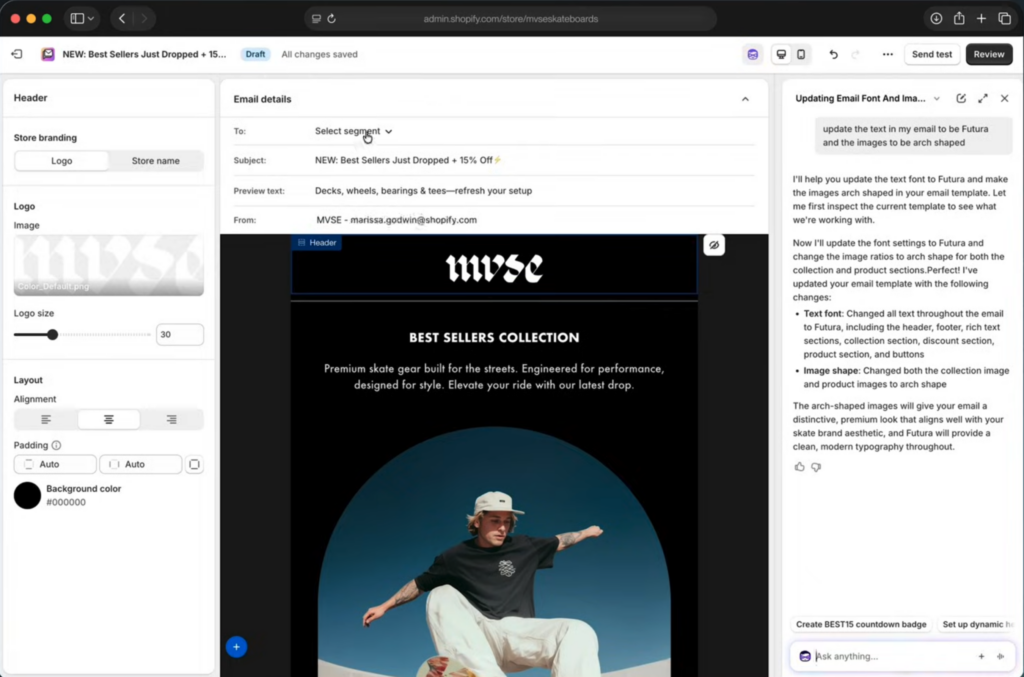
Commerce and marketing platforms started adding AI directly into their products. Shopify, Adobe Commerce, HubSpot, Klaviyo, and ad platforms introduced AI features for content generation, segmentation, recommendations, and campaign optimization. These tools improved specific tasks, but most remained point solutions inside one platform, without coordinating the full marketing workflow.
2025–2026: AI orchestration and agents in marketing operations
Currently, the focus is shifting from using AI inside individual tools to connecting AI across workflows. For eCommerce, this can mean bulk product content generation from structured catalog data, dynamic audience segmentation, adaptive lifecycle flows, paid media optimization loops, and automated reporting.
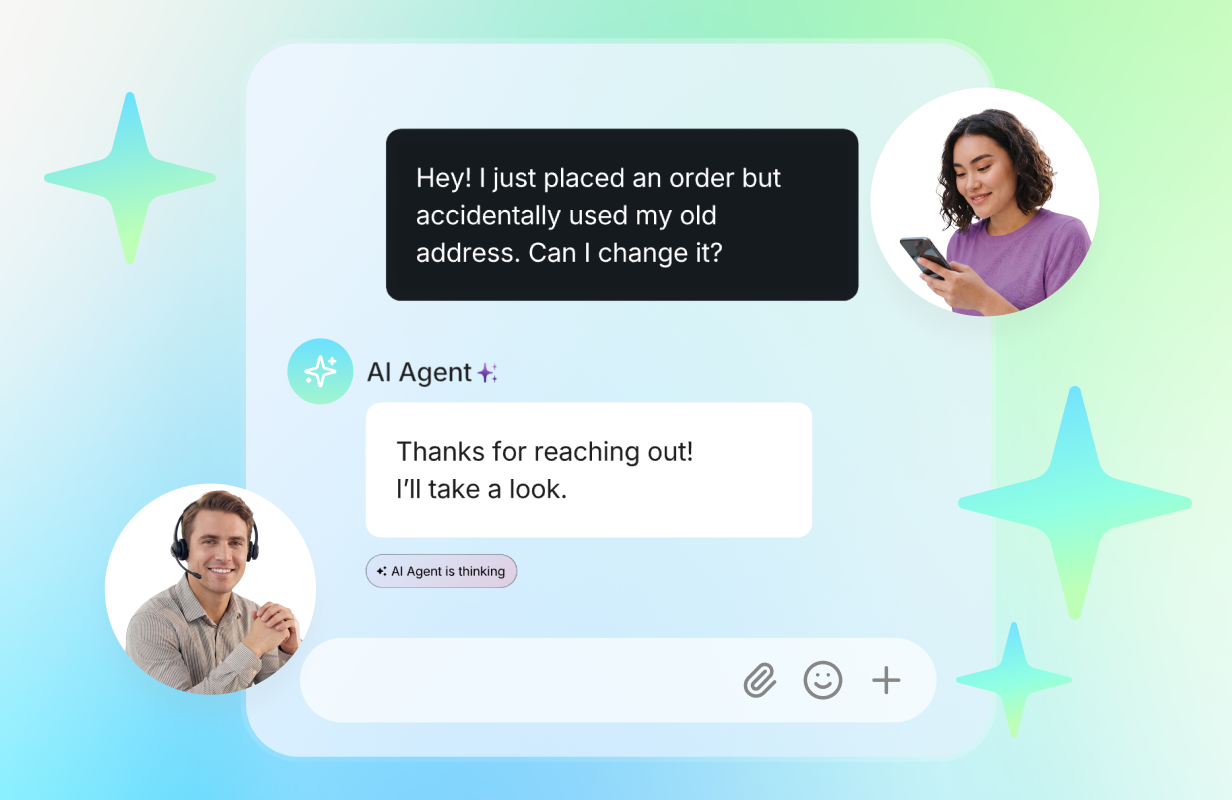
AI agents build on this orchestration layer by helping define next steps, use connected tools, check constraints, prepare outputs, monitor results, and route decisions for human review.
"Traditional automation follows fixed rules: if X happens, trigger Y. AI agents are more goal-oriented: given this objective, these data sources, and these constraints, recommend or execute the next best action."
That does not mean marketers should hand over full control. Human-in-the-loop is still a key component, where AI handles repetitive execution and analysis while marketers set the strategy, define guardrails, approve outputs, and decide when brand, budget, or customer experience needs human judgment.
If you're a brand on a Magento or Shopify store, you can request a demo to see how AI can connect with your store data and architecture for faster, more scalable campaigns.
5 AI Marketing Automation Workflows for eCommerce
Marketing teams can use AI across content production, customer segmentation, lifecycle marketing, paid media, and campaign operations. On Shopify, an IDC study of Klaviyo and Shopify customers found brands using Klaviyo's AI-driven CRM saw 73% average revenue growth over three years. On Magento (Adobe Commerce), merchants using Adobe's AI segmentation and personalization tools have significantly cut low-performing sends.
The key distinction is whether AI is being used for one-off assistance or as part of a repeatable marketing process. A single AI-generated product description may save time, but the larger opportunity is to connect AI to the systems where eCommerce work actually happens.
| Use Case | Description | Examples |
|---|---|---|
| Content generation | Batch-generate product descriptions, multilingual copy, ad creatives | Shopify Magic, Jasper, Adobe Firefly |
| Audience intelligence | Identify behavioral patterns, predict high-value users, dynamically update segments | Klaviyo AI, Adobe AI |
| Automated triggers | Cart abandonment, post-purchase journeys, replenishment reminders, win-back flows | Klaviyo, Omnisend, Brevo |
| Ad campaign optimisation | Creative testing, audience adjustments, real-time bid optimization, performance monitoring | Meta Advantage+, Google PMax, Pencil |
| AI agent workflows | Cross-system coordination, draft campaign actions, monitor results, alert teams. | Custom AI agents |
1. Content Generation
AI content generation is often the easiest starting point for eCommerce teams. It can support product descriptions, SEO titles, meta descriptions, category copy, translations, email snippets, ad copy, and social media content.
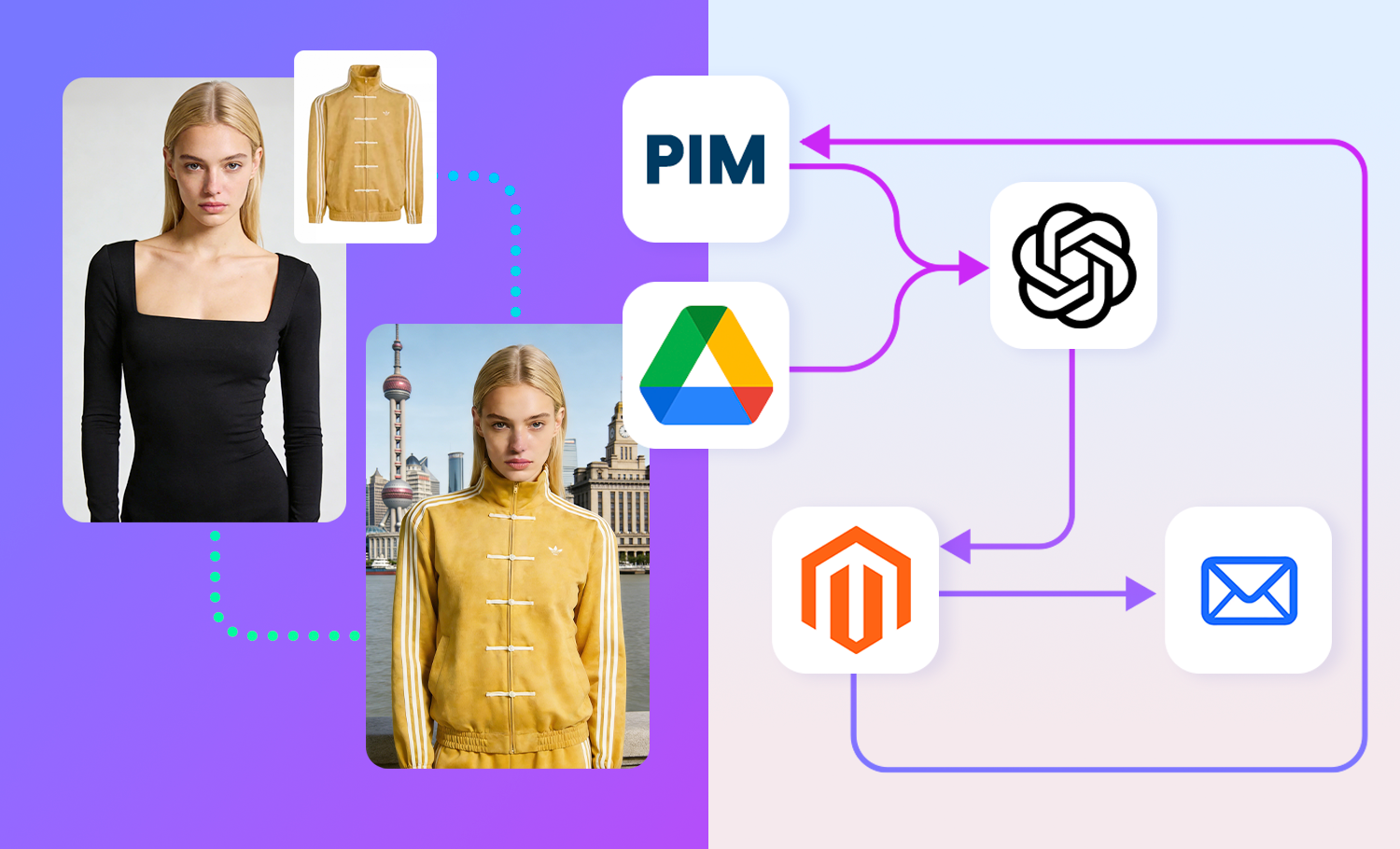
At a basic level, this may mean using AI to draft copy for a single product or campaign. The bigger opportunity is to connect AI to product data so content can be generated in bulk.
A more advanced setup could work like this:
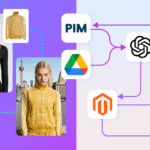
- A new product is added to Shopify, Adobe Commerce, a PIM, ERP, or product spreadsheet.
- The system pulls structured fields such as product name, category, attributes, ingredients, size, use case, target market, and SEO requirements.
- AI generates draft product descriptions, metadata, translations, and channel-specific copy.
- The output is sent to an approval sheet, saved as unpublished content, or routed to a content manager before publishing.
"This is where AI content generation becomes more than manual prompting. Instead of asking for one description at a time, teams can build repeatable workflows for product launches, catalog updates, multilingual content, and campaign assets."
Some platforms already offer parts of this natively, such as AI-assisted text generation or translation support. A full workflow from product creation to AI-generated copy, localization, review, and publishing usually depends on the stack. It may require platform automation, apps, APIs, or a custom integration layer.
2. Audience Intelligence
AI can help identify customer signals that are difficult to manage manually: repeated browsing without purchase, high-value cart abandonment, discount sensitivity, likely churn, product affinity, or lengthening repurchase cycles.
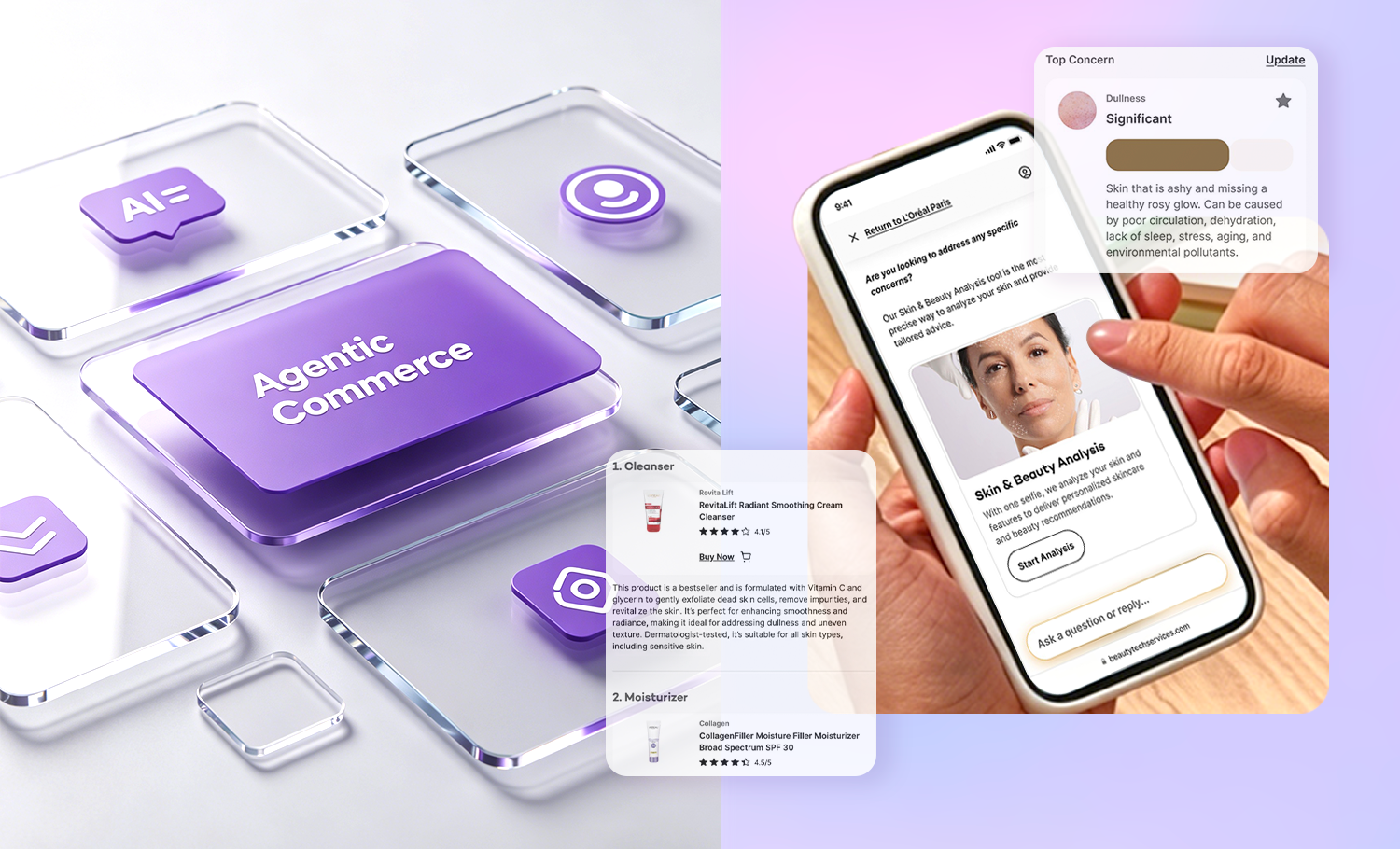
These insights can feed dynamic CRM segments for email, SMS, onsite personalization, and paid media audiences. Instead of relying only on static lists, brands can update segments based on how customers actually behave.
3. Marketing Automation
Traditional rules send a fixed email 24 hours after cart abandonment. AI can make these flows more adaptive:
- Analyzing a user's historical purchase frequency, discount sensitivity, and email open rates.
- Determining the optimal contact time, content, and whether to include a coupon.
- Generating personalized content and sending it at the predicted peak engagement time.
- Tracking conversion results to optimize future touchpoint strategies.
4. Ad Campaign Optimization
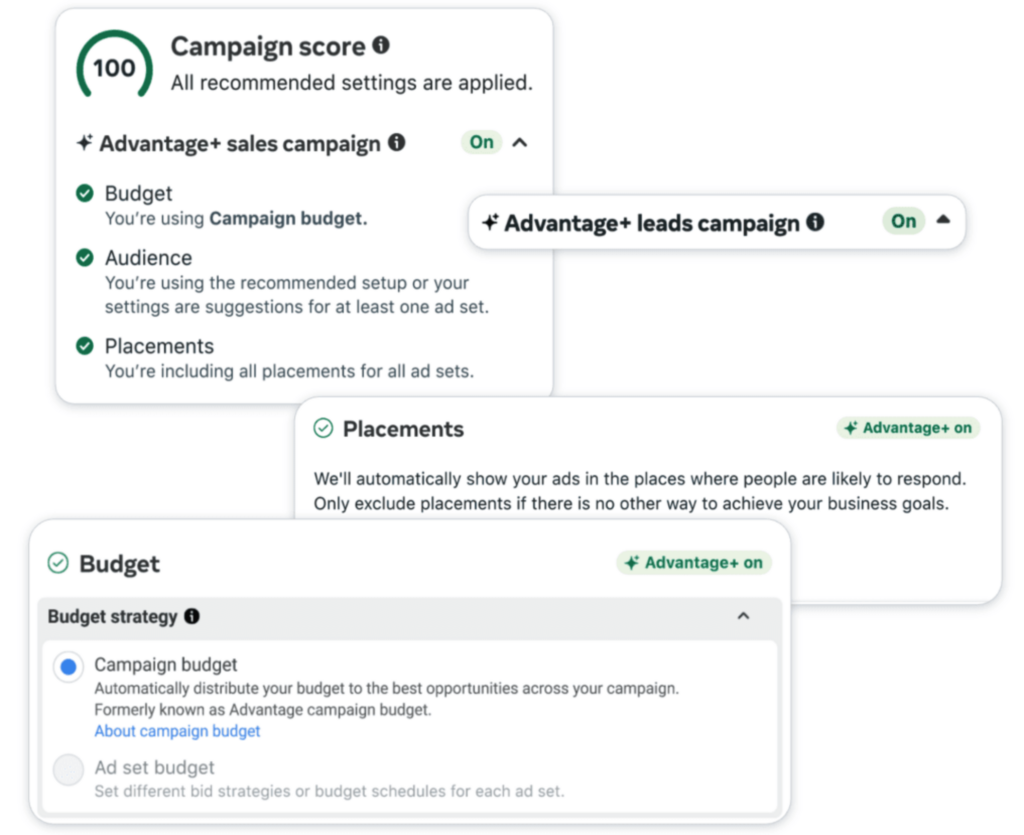
Paid media platforms already use AI heavily. Meta Advantage+ and Google Performance Max can support automated bidding, audience expansion, placement selection, budget allocation, and creative delivery.
AI monitors conversion rates and ROAS in real time, shifting budget toward higher-performing creatives and generating new variants automatically. Meta's Advantage+ suite reports an average ROAS improvement of around 22% versus manually managed campaigns. Google Performance Max applies similar AI optimization across its paid search infrastructure.
For more advanced use case in campaign optimization, read our piece on AI-driven dynamic pricing:

5. Agentic Workflows
The power of an AI Agent lies in connecting individual capabilities into an autonomous workflow. For Agentic workflows connect multiple AI capabilities into a coordinated process. Instead of using AI only to generate copy, summarize data, or recommend a segment, an AI agent can help manage the steps around a campaign.
For a major promotion, this could include:
- Pulling product, customer, inventory, and campaign data
- Recommending target segments
- Drafting email, SMS, ad, and onsite content
- Checking constraints such as stock, budget, margin, or approval rules
- Monitoring performance once the campaign is live
- Alerting the team to anomalies
- Preparing a post-campaign review
The key difference is coordination. A manager still sets the goal, timeline, budget, and guardrails. The agent supports execution by moving between tools, preparing outputs, and surfacing decisions for human review.
This is also where AI projects become more dependent on system integration. Agentic workflows work best when the eCommerce platform, CRM, ad platforms, analytics tools, product data, and approval processes are connected clearly enough for the agent to use them.
Implementing AI for Marketing Automation
The right starting point depends on where your team has bottlenecks, where your data is reliable, and which workflows are repetitive enough to automate. Before choosing tools, brands should audit:
- Manual bottlenecks: Which tasks consume the most time across content, CRM, paid media, reporting, or campaign setup?
- Data readiness: Is product, customer, campaign, and inventory data clean enough for AI to use?
- Workflow maturity: Are existing processes already documented, or are teams still relying on ad hoc coordination?
- Approval requirements: Which outputs can be automated, and which need human review for brand, legal, budget, or compliance reasons?
- Integration gaps: Which systems need to talk to each other, such as the eCommerce backend, CRM, ad platforms, analytics tools, PIM, or ERP?
In general, brands should start with lower-risk automation before moving into agentic workflows. Content drafts, reporting summaries, segment recommendations, and campaign analysis are easier to test because humans can review the output before anything goes live.
More advanced workflows, such as AI agents preparing campaigns, adjusting audiences, monitoring spend, or triggering follow-up actions, require stronger data governance and clearer permissions. Agentic AI works best when the underlying automation logic is already proven.
At this stage, a consistent SKU, attribute framework, complete behavioral tracking, and unified customer identity across channels helps lay the data foundation to support smart automations.
Not sure if your catalog structure, data tracking, or integrations are AI-ready? Get an AI readiness check and TMO will assess your setup and flag the key gaps to fix first.
Streamlining Marketing Operations with TMO
For eCommerce brands, the opportunity is identifying where AI can reduce manual work, improve decision speed, and support better customer experiences across content production, CRM, lifecycle marketing, paid media, and campaign operations.
TMO Group helps brands evaluate and implement AI-driven features across Shopify Plus and Adobe Commerce, including platform development, data structure, tool integration, workflow automation, and custom AI agent design where needed.
Ready to assess where AI marketing automation fits into your eCommerce stack? Reach out to us for a diagnostic consultation.
FAQ
AI marketing is goal-driven, reasoning independently and adapting continuously. Traditional automation follows fixed pre-set rules.
The five key areas are: content generation, audience intelligence, automated triggers, ad campaign optimization, and AI agent workflows.
Start with content automation, then add email and recommendation flows, ad optimisation, cross-system data integration, and finally AI agent workflows.
An AI agent understands objectives, coordinates across systems, and executes complex tasks autonomously, going far beyond rule-based automation tools.
The focus is shifting from manual execution to strategic management. Major platforms like Meta and Adobe are now "Agent-first," and by 2028, most brands will use Agents for one-to-one personalization.