



From product content generation to conversational and CX interfaces, AI is increasingly embedded across eCommerce systems. This shift is changing how products are discovered, marketed, and sold, as well as how retail organizations operate.
We've previously written about Why Magento Still Wins for Complex Business LogicLearn how Magento’s layered architecture and modular design enable complex commerce logic, safe customization, and long-term scalability.Magento's extensible architecture, API access, and integration ecosystem, which allow it to connect with a wide range of AI tools and data systems and the product catalogs, customer data, pricing, inventory, orders, and transaction workflows that already sit within the commerce platform.
In this article, we look at how AI fits into Magento and Adobe Commerce environments, the most relevant eCommerce use cases, and the technical and operational foundations required before implementation.
TMO has over a decade of experience in custom Magento development and works with merchants exploring AI-driven approaches to automation and personalization.
Adobe's AI Ecosystem and the Role of Magento
Magento exists in two primary editions: Magento Open Source and Adobe Commerce (formerly Magento Commerce).
Magento Open Source provides the core commerce engine and extensible architecture that allow integration with external AI tools and services. Adobe Commerce builds on this foundation and connects more directly with Adobe’s broader Experience Cloud ecosystem, where several AI-driven capabilities are developed and delivered.
Within this ecosystem, Magento primarily serves as the commerce execution layer. Product catalogs, pricing rules, inventory data, and transaction workflows are managed in the commerce platform, while other Adobe services contribute data infrastructure, AI models, and experience orchestration.
| Product | Function |
|---|---|
| Adobe Commerce (Magento) | Commerce engine managing catalog, pricing, inventory, and transactions |
| Adobe Sensei | Predictive AI used for recommendations, search optimization, and analytics |
| Adobe Firefly | Generative AI for image and creative asset generation |
| Adobe GenStudio | AI-assisted marketing content creation and campaign workflows |
| Adobe Experience Platform (AEP) | Customer data platform that unifies behavioral and transactional data |
| Adobe Experience Manager (AEM) | Content management and experience delivery across channels |
In this architecture, Magento does not function as the primary AI layer. Instead, it provides the operational infrastructure where AI-driven insights and automation can be applied. Data stored in the commerce platform can be used by surrounding systems to personalize experiences, generate content, or support automated decision-making.
AI Application in eCommerce
AI applications in commerce usually affect one of two areas:
- Customer experience (front end): improving product discovery, recommendations, and shopping interfaces
- Operations (back end): automating repetitive tasks and improving efficiency in catalog management, merchandising, and support
Despite widespread interest in AI, many discussions remain abstract. Retailers often know they should adopt AI, but translating that into concrete applications within a commerce platform is less straightforward. The following categories illustrate where AI is commonly applied in Magento-based environments.
AI capabilities in commerce environments generally fall into three categories: predictive, generative, and agentic systems. These categories describe how AI interacts with commerce data and workflows, from analyzing historical data to generating content or automating operational tasks. In practice, most implementations combine multiple tools and services to deliver these capabilities.
1) Predictive AI
Predictive AI relies on machine learning models trained on historical behavioral and transactional data. These systems identify patterns and probabilities that can help optimize product discovery, merchandising, and marketing decisions:
- Product recommendations based on browsing behavior, purchase history, and product affinity
- Search optimization, including ranking adjustments based on user behavior and intent
- Demand forecasting using historical sales and seasonal trends
- Fraud detection and risk analysis during checkout and payment processing
- Customer segmentation for targeted promotions or marketing campaigns
These capabilities are often supported by tools such as Adobe Sensei, recommendation engines, or external analytics platforms.
2) Generative AI
Generative AI systems produce new content using large language models or generative image models. In commerce environments, these tools are typically used to accelerate content creation and product catalog management:
- Product description generation based on structured product attributes
- Catalog enrichment, such as generating titles, bullet points, or attribute summaries
- Marketing copy creation for campaigns, emails, or landing pages
- Image and creative asset generation for product visuals and marketing materials
- Localization and translation of product content across markets
Within Adobe’s ecosystem, tools such as Firefly and GenStudio support several of these use cases, although many implementations also rely on external generative AI services.
3) Agentic AI and Automation Workflows
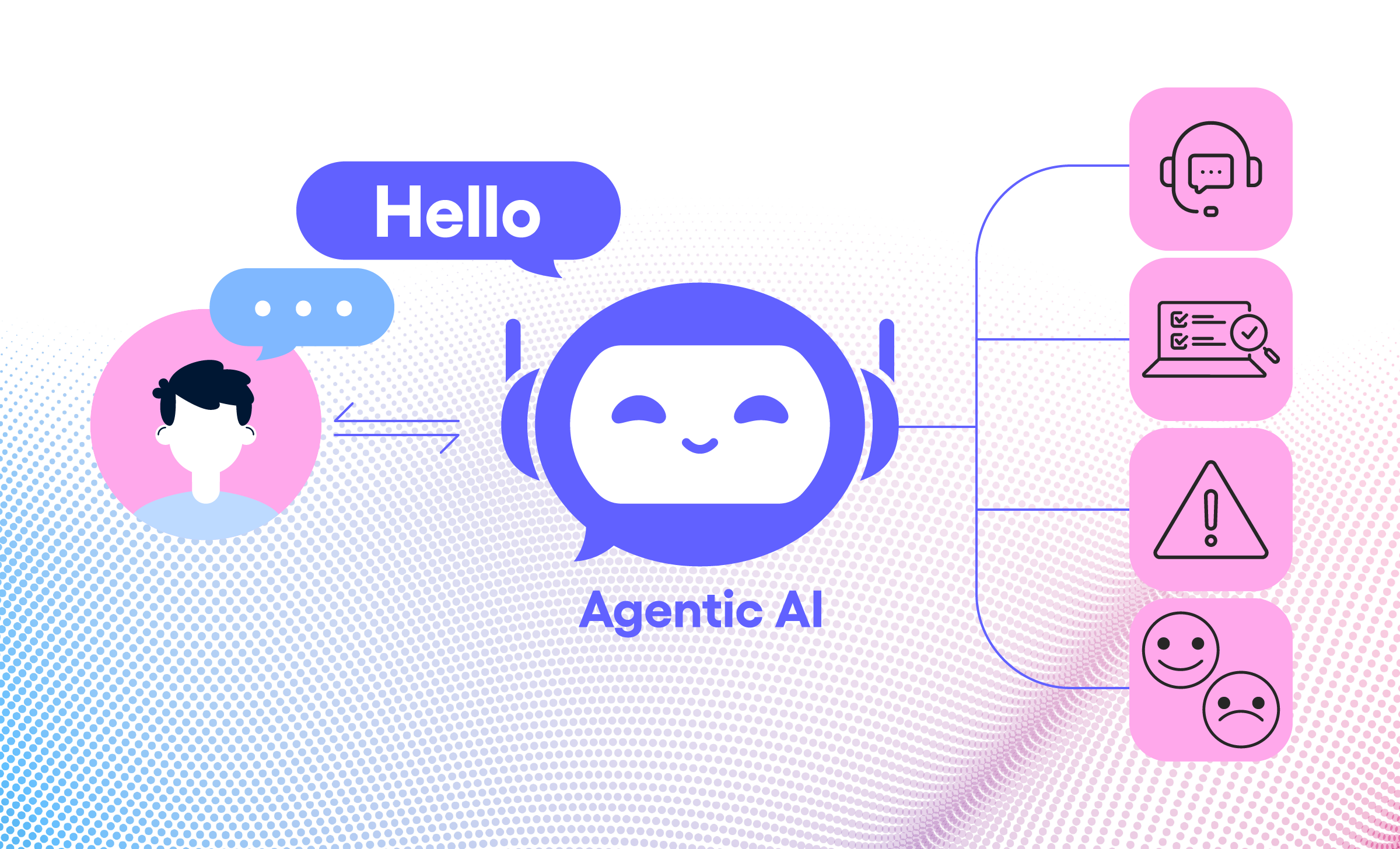
Agentic AI refers to systems that can monitor data, evaluate conditions, and trigger actions across operational workflows. In commerce environments, these systems are typically used to automate tasks that previously required manual intervention:
- Catalog management automation, such as enriching product attributes or detecting missing data
- Merchandising optimization, including adjusting product rankings or promotional rules
- Customer support automation, where AI agents assist with order tracking, returns, or product questions
- Inventory monitoring and alerts based on sales velocity or stock thresholds
- Operational workflow automation, coordinating tasks across commerce, marketing, and fulfillment systems
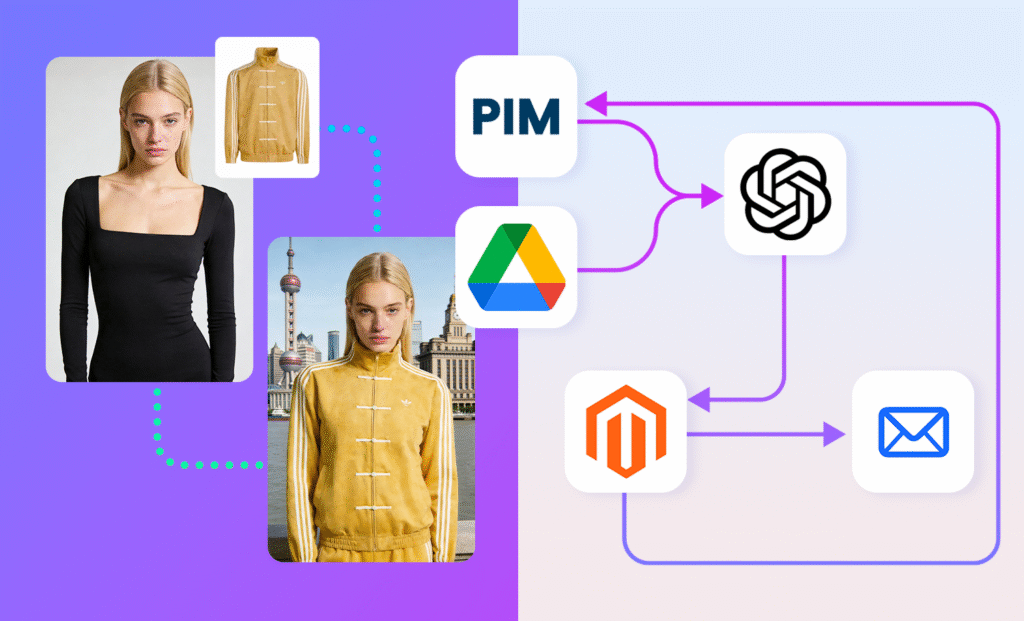
These systems generally interact with Magento through APIs and event-driven workflows, allowing automation layers to monitor and respond to changes in catalog data, orders, or customer behavior.
AI Modules vs. AI Agents
A useful way to evaluate AI is to consider the level of responsibility given to the system. At one end are relatively bounded capabilities designed to solve a specific problem. At the other are agents that coordinate several capabilities and systems toward an operational objective.
| Focused AI capability | Commerce agent | |
|---|---|---|
| Purpose | Solve a defined task | Support or execute a broader objective |
| Scope | Bounded workflow | Multiple steps and systems |
| Example | Extract and standardize product attributes | Identify catalog quality problems, prepare corrections, request approval, and update the relevant system |
| Decision-making | Limited | Context-dependent |
| System access | Usually narrow | Often spans several systems |
| Governance requirement | Output validation | Permissions, approvals, logging, escalation, and monitoring |
For most organizations, starting with a clearly bounded use case is easier to control and measure.
Greater autonomy becomes useful when the underlying process is already understood and when coordinating multiple tools or decisions is itself part of the problem.
AI Use Cases for Magento Merchants
Rather than starting with a particular AI model or technology, it is usually more useful to begin with recurring commerce problems.
Three areas are particularly relevant to Magento and Adobe Commerce environments:
1. Product and Catalog Intelligence
Large catalogs frequently accumulate inconsistent information over time.
Product attributes may be incomplete, naming conventions vary between markets, important specifications can remain buried inside PDFs or images, and similar products may use different taxonomies across websites or systems.
These issues already affect conventional commerce operations. They become even more important when product information is being consumed by search engines, recommendation systems, AI assistants, marketplaces, or other automated interfaces.
AI can support areas such as:
- Product attribute extraction
- Attribute standardization
- Category and taxonomy mapping
- Detection of missing or contradictory product information
- Product compatibility data
- Multilingual content generation
- Product feed generation and quality assurance
- SEO and AI-search content enrichment
For example, an industrial merchant could use AI to extract technical specifications from product documentation and map them into standardized Magento attributes.
A multinational retailer could use the same underlying process to identify where equivalent products have inconsistent specifications between regional catalogs.
The important point is that the value comes from improving the product knowledge layer, not simply generating more copy.
Better structured product information can subsequently support search, recommendations, product comparisons, customer service, external shopping platforms, and AI assistants.
2. AI Product Discovery and Product Advisors
Traditional eCommerce navigation works well when shoppers understand the catalog and know which filters to use.
It performs less effectively when product selection depends on a combination of technical requirements, compatibility rules, intended use, or personal preferences. A shopper may ask:
- Which model is suitable for outdoor use in temperatures below freezing?
- Which replacement component is compatible with the product I already own?
A conventional keyword search or category filter may struggle with these questions because the user is expressing a requirement rather than a product name. AI-assisted discovery can combine natural-language interfaces with structured catalog information to support:
- Natural-language product search
- Product recommendations
- Product comparison
- Compatibility checks
- Product page Q&A
- Scenario-based selection
- Guided buying experiences
This is particularly relevant for large catalogs, technical products, B2B commerce, and categories where shoppers routinely compare specifications before purchasing.
However, conversational interaction should not be treated as the objective itself. The more meaningful questions are whether the system improves:
- Search success
- Zero-result search rates
- Recommendation engagement
- Product discovery
- Product page progression
- Add-to-cart behavior
- Assisted conversion
An AI advisor that generates many conversations but does not improve product selection has limited commercial value.
3. Customer Service and Order Assistance
Customer service teams often spend significant time handling highly repetitive questions:
- Where is my order?
- When will it arrive?
- Can I return this product?
- What does the warranty cover?
- Is this item compatible with another product?
- Where can I find the manual?
The information required to answer these questions may already exist, but often across multiple systems.
Product information may sit in Magento or a PIM. Order status may come from the OMS. Returns policies may live on the website. Warranty documentation may exist as PDFs, while customer records and previous service interactions sit in a CRM or support platform.
AI can provide a common interface across these information sources. Potential capabilities include:
- Product and policy Q&A
- Order-status enquiries
- Delivery information
- Return and exchange guidance
- Warranty and product manual assistance
- Multilingual customer support
- Escalation to human agents when confidence is insufficient
For simple implementations, this can remain a knowledge assistant. More sophisticated implementations may connect directly with authenticated customer and order information or coordinate actions across Magento, CRM, OMS, Zendesk, and other operational systems.
At this point, architecture, access control, and governance become significantly more important than the conversational interface itself.
When Does an AI Workflow Become an Agent?
Not every AI-enabled process needs an agent. Consider a merchandising team managing several regional Magento catalogs.
While a focused AI tool might review product information and flag listings with incomplete attributes, a more agentic workflow could:
- Monitor the catalog for incomplete product records.
- Identify missing information.
- Retrieve source product data.
- Generate proposed corrections.
- Apply business and localization rules.
- Route higher-risk changes for approval.
- Update Magento or the PIM after approval.
- Record the action for audit and reporting.
The value of the agent is not simply that AI is being used. It is that several steps that previously required coordination between systems and people are being handled as one controlled workflow. Similar patterns can apply to:
- Merchandising operations
- Promotion preparation
- Advertising management
- Inventory monitoring
- Product content localization
- Campaign quality assurance
- Customer support
- B2B sales and quotation workflows
This is also why agentic projects generally require greater operational maturity than isolated AI features.
How Magento's Architecture Supports AI Integration
The ability to implement AI features is largely determined by the platform’s architecture. Several architectural characteristics make Magento well suited for AI-driven commerce implementations:
| Capability | Application |
|---|---|
| API-driven architecture | Provides programmatic access to catalog data, orders, inventory, pricing rules, and customer information, allowing AI systems to analyze data and trigger actions within the platform. |
| Event and observer system | Enables external systems to react to platform events such as product updates, order creation, or inventory changes, which supports automation workflows and AI-driven decision triggers. |
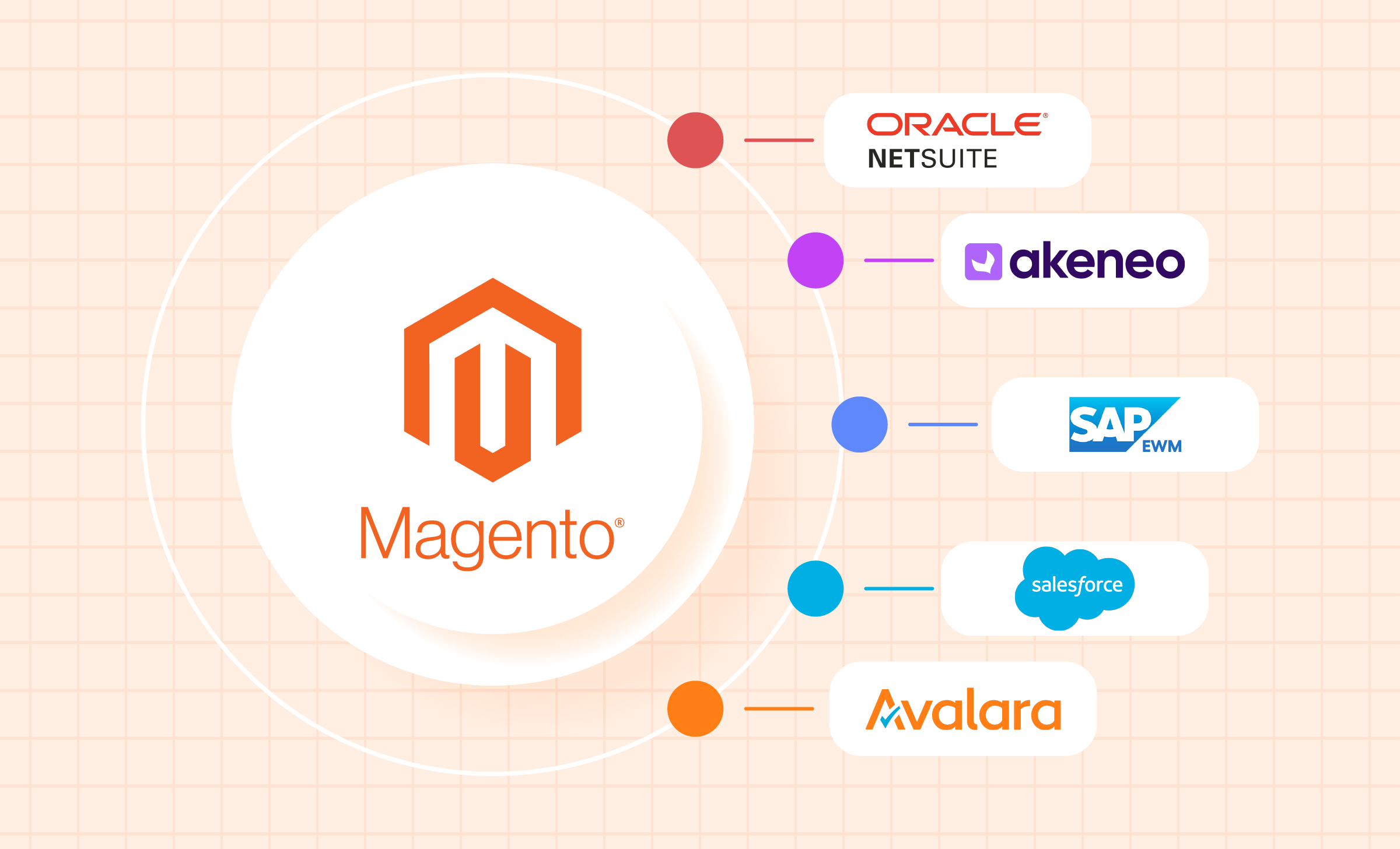
| Composable integration ecosystem | Magento commonly integrates with CDPs, PIM systems, analytics platforms, and search engines, allowing AI models to operate across the broader commerce stack. |
| Headless commerce support | Separates frontend experiences from backend commerce logic, enabling AI-driven interfaces such as conversational shopping assistants or dynamic search experiences. |
| Extensible module framework | Allows developers to extend platform functionality and integrate custom automation or AI services without modifying the core system. |
These characteristics allow Magento to function as the transactional core of an AI-enabled commerce architecture, where AI systems operate alongside the platform rather than entirely within it.
Building an AI-Ready Commerce Stack
Implementing AI features in Magento environments depends less on the platform itself and more on the surrounding infrastructure that supports it. AI systems require reliable data access, clearly defined operational controls, and structured ways to deliver personalized experiences.
Organizations typically need to address three foundational layers when preparing their platforms for AI-driven commerce:
a) Data Infrastructure
AI systems depend on structured and accessible data. In commerce environments, this includes both operational data stored within the platform and behavioral data generated by customers interacting with storefronts. Key components often include:
- Structured product data, including consistent attributes, categories, and metadata
- Customer behavioral tracking, such as browsing activity, search queries, and purchase history
- Integration with analytics platforms or data warehouses for large-scale data processing
- Product Information Management (PIM) systems to centralize catalog data across channels
Without consistent data structures and reliable tracking, AI models may produce incomplete or inaccurate results.

b) System Access and Integration
The next question is where the AI needs to retrieve information and where it may need to perform an action. Depending on the use case, this could involve:
- Magento
- PIM
- ERP
- OMS
- CRM
- WMS
- Customer service systems
- Analytics platforms
- Search platforms
- Advertising systems
- Data warehouses
A simple catalog enrichment workflow may require access to only one or two systems, while a commerce operations agent could require access to several. Integration complexity should therefore be assessed before selecting the AI layer.
c) Governance and Oversight
As AI begins to influence operational decisions, organizations often need mechanisms to monitor and control automated actions. This governance layer ensures that AI-generated outputs remain aligned with business rules and operational policies. Typical governance considerations include:
- Approval workflows for AI-generated product content or marketing materials
- Guardrails for automated pricing or promotions
- Monitoring systems that track AI-generated changes or recommendations
- Auditability, allowing teams to review and evaluate automated decisions
These controls help maintain transparency and reduce the risk of unintended outcomes as automation increases.
d) Personalization Framework
AI-driven personalization requires more than recommendation engines. Effective implementations typically define how customer intent is interpreted and how experiences adapt across the storefront:
- Customer segmentation models based on behavioral and transactional data
- Intent detection, identifying signals such as browsing patterns or search behavior
- Experience orchestration, determining which products, content, or promotions are presented
- Performance measurement, evaluating how personalization affects conversion, engagement, and retention
Best Practices for AI Adoption
AI delivers value in commerce when it is applied with discipline, and poorly defined initiatives or weak data foundations tend to produce little measurable impact. Hera are some practices reduce that risk:
- Start with measurable, high-ROI use cases. Search relevance, product recommendations, and fraud detection have established benchmarks and clear business impact. These are safer entry points than speculative or experimental applications.
- Avoid “AI for AI’s sake.” Deployments should map to specific KPIs such as conversion rates, inventory turnover, or fraud reduction. Vague goals like “improving customer experience” lack accountability and often lead to wasted investment.
- Prioritize data quality. AI outcomes are only as reliable as the data used to train or feed models. Poor product attribution, inconsistent catalog data, and incomplete customer records undermine effectiveness. This remains a frequent barrier to effective AI adoption.
- Maintain frictionless user experience. AI should improve efficiency or clarity, not add complexity. Overly aggressive personalization, intrusive chatbots, or opaque decision-making can create distrust and reduce conversion.
- Deploy incrementally and scale validated workflows. Effective programs use a phased approach: test in controlled domains, measure ROI, and expand only after results are validated. Attempts to roll out AI broadly without testing usually increase costs without clear gains.
Implementing AI-driven Workflows with TMO
Magento’s architecture makes it well suited to participate in AI-enabled commerce ecosystems. Its extensibility, API access, and integration capabilities allow it to connect with external AI services, data platforms, and automation frameworks.
TMO works with Magento and Adobe Commerce merchants to identify where AI can create measurable value across the commerce system and to design the architecture required to support it.
Rather than approaching AI as a generic platform feature, we typically distinguish between focused AI Commerce Modules and more complex Commerce Agents:
- Commerce Agents, supporting more complex workflows across merchandising, commerce operations, advertising, customer experience, and B2B sales
- AI Catalog Intelligence, for product-data structuring, enrichment, localization, feed quality, and catalog consistency
- AI Product Discovery & Advisor, for natural-language product discovery, comparison, compatibility, and guided shopping
- AI Service & Order Assistance, connecting product, policy, order, and service information
For existing Magento environments, the first step is usually to identify the use case, assess the required data and integrations, and determine how much automation is commercially useful before selecting the technical implementation.
If you want to evaluate how AI can enhance personalization, streamline operations, or accelerate creative workflows in Magento, schedule a consultation with TMO to discuss how AI applies to your specific project in building scalable and localized commerce experiences.
FAQ
Magento Open Source does not provide a comprehensive built-in AI layer. However, its API-driven and extensible architecture allows merchants to integrate external AI tools and services.
Adobe Commerce also connects with Adobe's broader ecosystem, which includes AI-powered technologies for areas such as recommendations, analytics, content creation, and customer experience.
Yes. Magento provides access to important commerce data including products, customers, orders, inventory, pricing, and transactions. Its APIs, event system, extensibility, and integration ecosystem make it suitable for connecting AI applications to commerce workflows.
The feasibility of a specific implementation depends more on data quality, system architecture, and business processes than on Magento itself.
Yes. Large language models can be connected to Magento through APIs or middleware.
However, connecting an LLM directly to Magento is usually only one part of an implementation. Reliable commerce applications also need appropriate product or business knowledge, permission controls, validation processes, and integration logic.
Common applications include product recommendations, intelligent search, product-data enrichment, multilingual content generation, product advisors, customer-service assistants, inventory forecasting, merchandising support, and commerce workflow automation.
The most appropriate use case depends on the merchant's catalog, customer journey, operating model, and available data.
An AI assistant typically answers questions or performs a relatively bounded task.
An AI agent can interpret context, coordinate several steps or systems, and potentially initiate actions toward an objective.
For example, a product assistant might recommend a product based on a shopper's requirements. A commerce operations agent might monitor product quality, identify a problem, prepare a correction, request approval, and update the relevant system.
No. Magento Open Source can integrate with external AI platforms through APIs and custom development. Adobe Commerce provides additional access to Adobe's ecosystem, but many AI implementations use external models and services regardless of Magento edition.
Headless architecture can make certain customer-facing AI experiences easier to implement because the storefront is separated from the commerce backend.
For example, conversational product discovery or dynamic recommendation interfaces can be built into a Next.js frontend while Magento continues to manage catalog and transaction logic.
Headless architecture is not required for every AI use case, particularly back-office automation.
Start by defining a specific business problem and identifying the information and systems required to solve it.
Product-data quality, integration access, governance, permissions, and measurement should normally be assessed before deciding which AI technology to implement.