




Getting pricing right has always mattered disproportionately: A famous experiment by McKinsey found that a 1% improvement in price, assuming stable volume, could lift operating profit by around 8%. That also means small pricing mistakes can have an outsized downside.
In 2026, as AI spreads into more operational decisions, pricing decisions are also a part of this discussion, and some of the biggest retailers are already testing its commercial value. Walmart’s March 2026 patent for machine-learning-based demand and pricing methods is one recent signal that AI-assisted pricing is moving closer to real-world adoption in eCommerce.
While AI-driven pricing may not be as far from the mainstream as it once seemed, that does not mean every use case is equally practical, or equally low-risk. This article explores four areas where AI may add value, and the regulatory and operational constraints that are already shaping adoption.
TMO supports brands in building the data, workflows, and integrations needed to deploy AI-driven solutions for eCommerce, including pricing, search, personalization, and operations.
How AI and ML Can Enhance Dynamic Pricing
Machine learning is not a replacement for existing pricing workflows so much as a way to make them more responsive and better informed. Rule-based pricing, margin guardrails, and human review still have an important role. Where AI becomes useful is in situations where pricing decisions depend on more variables, faster feedback loops, and more ambiguity than fixed rules can handle efficiently.
a) Interpreting a broader set of signals
Traditional repricing tools usually respond to visible triggers such as competitor price changes or inventory thresholds. Machine learning can widen that lens by incorporating a broader mix of pricing signals before a decision is made.
- Can factor in inputs such as demand trends, historical price sensitivity, promotional timing, stock pressure, and market-specific behavior.
- Helps pricing teams act on a fuller picture, rather than reacting to a single trigger in isolation.
b) Moving beyond fixed responses
Rule-based logic remains useful, especially where margin guardrails and channel constraints need to stay explicit. But fixed responses can become blunt when pricing conditions change quickly or vary across products.
- Reduces reliance on one-size-fits-all rules such as matching or undercutting competitor prices by a fixed percentage.
- Supports more adaptive pricing recommendations based on likely impact on conversion, sell-through, or margin.
c) Scaling decision support across larger catalogs
As SKU counts, sales channels, and markets expand, manual review becomes harder to sustain. This is where AI can help pricing teams prioritize effort rather than trying to automate every decision blindly.
- Makes it easier to support more granular decisions across larger catalogs while retaining human oversight where needed.
- Surfaces anomalies, exceptions, and products that may need pricing review first.
That does not mean full autonomy is always the goal. In many cases, the more realistic setup is a hybrid model where rules provide control, machine learning improves recommendations, and human teams retain oversight on sensitive or high-impact products:
| Pricing approach | Best for | Limitations | Where AI/ML may help |
|---|---|---|---|
| Manual review | Low SKU counts, sensitive products, approval-heavy workflows | Hard to scale, slower response times | Prioritizing which products need review |
| Rule-based pricing | Clear pricing logic, stable competitive environments, margin guardrails | Can be rigid in volatile markets | Refining rules with better demand and elasticity signals |
| ML-assisted pricing | Larger catalogs, more variables, faster-changing markets | Depends heavily on data quality and oversight | Estimating optimal price ranges, detecting patterns, improving recommendations |
4 Use Cases for AI-assisted Dynamic Pricing
AI is not equally useful across every pricing scenario. In practice, its value is highest where teams need to interpret more variables, react more quickly, or make more granular decisions than rule-based logic can handle efficiently. The use cases below are some of the most realistic starting points:
1. Price elasticity-based optimization
For many brands, the most obvious application is understanding where discounting is actually necessary and where it is simply giving margin away. AI can help model how different SKUs, categories, or customer segments respond to price changes, using historical transaction data, promotion history, and demand patterns to estimate price sensitivity more precisely.
- Role: Analyzes historical sales and discount data to identify which products are highly price-sensitive and which may be able to sustain narrower discounts without a meaningful drop in demand.
- Outcome: Helps brands move away from blanket discounting and protect margin more selectively, especially when purchase intent is strong or competing supply is limited.
- Example: This is often one of the first areas where AI-based pricing becomes practical, since even modest improvements in discount precision can have a measurable effect on profitability.
2. Long-tail inventory turnover
Slow-moving inventory is often where pricing teams feel the limits of manual intervention most clearly. Instead of defaulting to broad markdown campaigns, AI can support smaller and more controlled adjustments based on inventory age, sell-through velocity, and product-level response signals.
- Role: Monitors inputs such as Days of Inventory, stock pressure, historical markdown response, and conversion behavior to recommend where price reductions may help unlock movement.
- Outcome: Can improve inventory turnover while reducing the margin loss that comes from warehouse-wide clearance logic.
- Example: This is particularly useful in categories with high SKU counts, uneven size curves, or seasonal demand shifts, where static markdown rules tend to be too blunt.
3. Promotional strategy and discount configuration
Promotions are often more complex than base pricing because they involve multiple discount formats, overlapping channel logic, and competing commercial goals. AI can help teams evaluate which structures are more likely to drive conversion without creating unnecessary margin leakage.
- Role: Tests or models the likely performance of different promotional formats, such as flat discounts, bundles, or tiered incentives, against factors like product margin, inventory position, and historical conversion patterns.
- Outcome: Supports more deliberate promotion design by helping teams apply stronger discounts where they are needed and avoid over-incentivizing products that may already convert efficiently.
- Strategy: Making promotional decision-making more consistent across products, markets, and channels.
4. Personalized offers without changing the public price
In some cases, AI is more useful for tailoring incentives than for changing visible list prices. Rather than constantly adjusting the public-facing price, brands can use AI to trigger more selective offers based on customer behavior, lifecycle stage, or retention risk.
- Role: Connects CRM, behavioral, and transaction signals to deliver targeted incentives such as first-order discounts, retention offers, or member-only promotions at specific points in the customer journey.
- Outcome: Allows brands to personalize incentives while keeping the public price more stable, which can help protect overall price perception.
- Compliance: This is also one of the more sensitive applications, since the use of personal data in pricing or individualized offers can trigger disclosure, consent, or fairness concerns depending on the market.
For these use cases, the realistic near-term model is not autonomous pricing in the purest sense, but a pricing co-pilot. AI can help identify patterns, recommend adjustments, and improve the speed and granularity of pricing decisions, while human teams retain control over strategy, guardrails, approvals, and brand-sensitive exceptions. That is a more plausible implementation path than handing full pricing authority to an unsupervised system, and it is where AI is most likely to deliver practical value today.
2026 Regulatory Outlook for AI Pricing
Several major markets are already putting rules in place that affect how businesses can use algorithmic systems in pricing, promotions, and individualized offers. While the specifics vary by jurisdiction, the broad direction is clear: brands will need stronger documentation, more transparent logic, and clearer guardrails when personal data influences pricing decisions.
| Market | Regulation / Framework |
|---|---|
| European Union | EU AI Act + Omnibus Directive |
| China | Regulations on Internet Platform Pricing Behavior |
| United States | State-level disclosure rules, including New York |
| South Korea | AI Basic Act |
| Southeast Asia | Fragmented national frameworks |
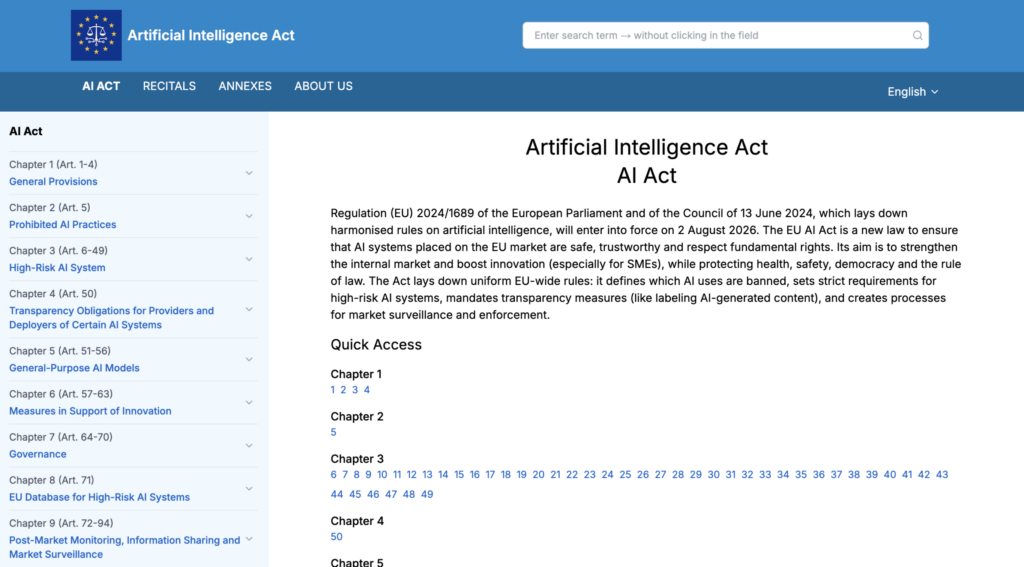
EU: stronger documentation and price transparency requirements
The EU is likely to remain one of the strictest environments for AI-assisted pricing. As the EU AI Act phases in, businesses using more advanced pricing systems will need to pay closer attention to documentation, accountability, and human oversight, especially where personal data is involved. Separately, the Omnibus Directive already places specific requirements on how promotional price reductions are presented, including the use of prior pricing history as a reference point.
Businesses should be able to explain how pricing decisions are generated, maintain clear logs of price changes, and avoid treating compliance as a layer that can be added after launch.
China: tighter scrutiny of algorithmic discrimination
China has moved more directly against opaque or discriminatory algorithmic pricing behavior. The direction of travel is clear: businesses should not use algorithms to apply differential pricing to users without proper authorization, and misleading discount presentation remains a major risk area.
Pricing logic based on market signals such as inventory, demand, or competitor activity is easier to justify than pricing tied to individual user profiles. The more personalization enters the equation, the more transparency and consent start to matter.
US: the main risk is uneven disclosure requirements
In the United States, the biggest challenge is emerging state-level requirements. That makes disclosure obligations especially important for brands using personal data to influence individualized offers or pricing.
It is safer to assume that individualized pricing will attract scrutiny and to design for disclosure and auditability early, rather than waiting for federal alignment.
South Korea and Southeast Asia: a fast-moving but uneven landscape
South Korea is emerging as one of the more developed regulatory environments for AI governance in Asia, while Southeast Asia remains more fragmented. Singapore is relatively mature in its governance approach, while other markets are still developing clearer enforcement standards.
Regional eCommerce operators should not expect one compliance model to fit every market. A more realistic approach is to set a higher baseline in stricter jurisdictions, then localize where needed.
Building AI-driven Commerce Experiences with TMO
For most brands, the realistic path forward is a controlled AI layer built on solid data, clear guardrails, and a narrow initial use case. The same principle applies more broadly across eCommerce: AI tends to create the most value when it is tied to real operational workflows rather than deployed as a black-box feature.
TMO helps eCommerce brands evaluate and implement practical AI solutions across the commerce stack, from discovery and planning to integration and rollout.
If you are assessing how AI could support your eCommerce business, reach out to us to define the right use cases and the most realistic path to deployment.