



At the start of each year, Weixin (WeChat) hosts Open Class PRO, an annual event intended to provide partners and developers with updates on platform usage, product development, and strategic priorities. The 2026 edition, held on January 15 in Guangzhou, also marked WeChat’s 15th anniversary and covered a broad range of topics across the ecosystem.
Among these, cross-border usage received increased attention, particularly in relation to Mini Programs and their role in serving Chinese users outside mainland China. Several sessions focused on how overseas Mini Programs are being used by global brands to support transactions, services, and user engagement in international markets.
As a WeChat Partner agency, TMO Group attended the cross-border sessions, which highlighted a measurable increase in overseas adoption. In 2025, overall overseas Mini Program transaction volume grew by more than 40 percent year on year, while certain segments, such as global mobility (+140%), recorded substantially higher growth rates. Alongside these usage trends, Weixin outlined a series of platform updates aimed at reducing friction for overseas users and entities.
In this article, we'll examine where this growth is coming from, how Weixin is enabling participation from overseas brands, and why Mini Programs are increasingly being used as a main layer for reaching Chinese users abroad.
TMO specializes in WeChat Development for international brands, supporting Mini Program initiatives across eCommerce, hospitality, event ticketing, and other cross-border use cases.
Overseas Mini Programs: 5B Annual User Sessions
We have previously covered the surge in WeChat Overseas: 15 Mini Programs Targeting Chinese TravelersOutbound trips are set to reach 155M+ in 2025. See how transport, tourism & retail brands target Chinese travelers with WeChat mini programs.overseas WeChat Mini Programs, particularly in sectors such as tourism, hospitality, mobility, and cross-border eCommerce, where Chinese outbound demand is structurally strong. The figures and use cases shared during WeChat Open Class PRO 2026 support this analysis, showing that overseas Mini Program growth is concentrated in the same categories where Chinese users already transact, travel, and consume services abroad.
- 100+ overseas countries and regions with active Mini Programs
- 5+ billion annual cross-border usage sessions on Mini Programs
- 30% year-on-year growth in active overseas Mini Programs during 2025
- 40% year-on-year growth in overseas Mini Program transaction volume
- 70% year-on-year growth in overseas Mini Program transaction value
- 2 trillion yuan (US $300B) in quarterly transaction value for Mini Programs (local + overseas)
These figures reflect aggregate cross-border activity rather than a single industry, reinforcing the stated vision of overseas Mini Programs as a multi-sector transaction and service layer rather than a niche channel, with 3 main user segments:
- Outbound Chinese Travelers (+60% YoY transaction volume)
- Inbound Travelers to China (+50% YoY transaction volume)
- Overseas Chinese Communities (+70% YoY transaction volume)

In parallel, WeChat Pay usage data highlights a clear distinction between revenue concentration and growth momentum. The highest-grossing outbound markets for WeChat Pay are Hong Kong SAR, Japan, Macao SAR, South Korea, and Thailand, while the fastest-growing markets include Kazakhstan, Malaysia, Maldives, Indonesia, and Sweden.

Two structural shifts explain why this opportunity has reached meaningful scale.
1) Chinese outbound consumption is structurally WeChat-native
For Chinese users traveling or living abroad, WeChat remains the primary interface for:
- Payments
- Service discovery
- Account login and identity
- Customer support and communication
This shows brands targeting Chinese consumers overseas are realizing reaching users within WeChat is often more effective than attempting to redirect them to unfamiliar apps or mobile websites. This is especially true in high-friction scenarios such as first-time usage, short stays, or transaction-heavy interactions.
2) Mini Programs have evolved from "light apps" into service hubs
Mini Programs were initially positioned as lightweight tools for specific tasks. Over time, their role has expanded significantly. Today, Mini Programs commonly support:
- End-to-end transaction flows
- Booking and service management
- Post-transaction support
- Repeated, multi-touch user journeys
This shift in development sophistication has enabled Mini Programs to operate as lifestyle and service hubs, particularly in outbound contexts where users prefer consolidated, familiar interfaces.

Top Global Brands are already on board
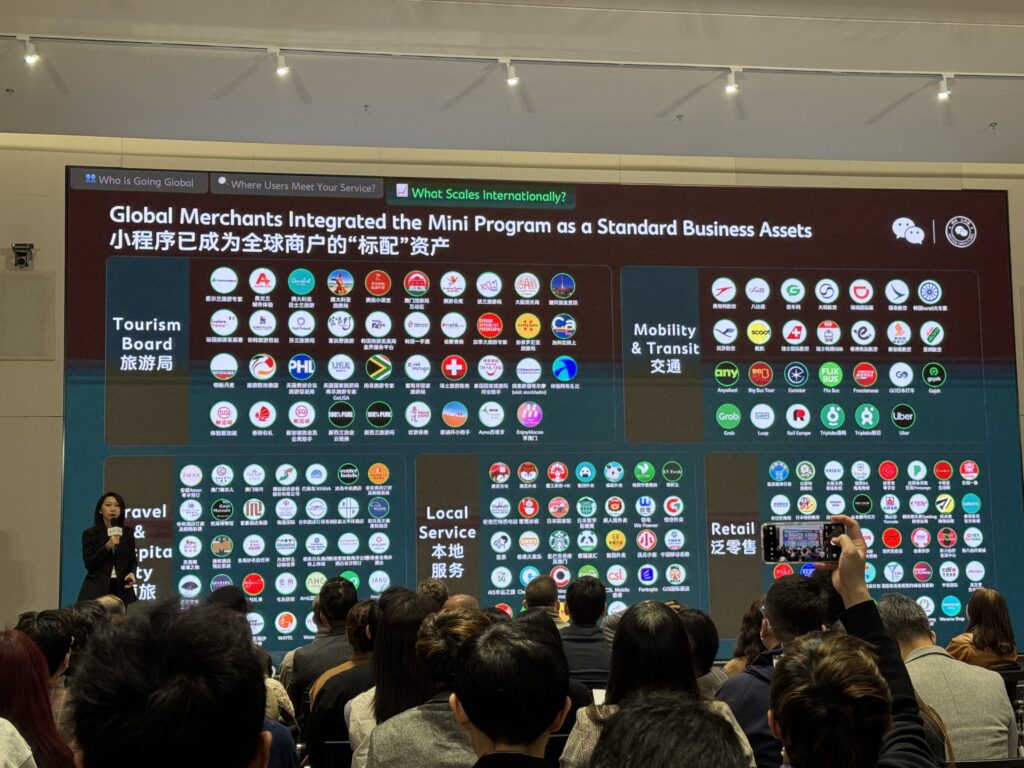
During the Open Class PRO sessions, Weixin highlighted overseas Mini Program deployments from global organizations such as Uber, the University of Birmingham, and Unite Students. While these businesses operate in different sectors, their reasoning converges on the same set of constraints:
- App downloads present a barrier for short-term or first-time users
- Payment friction directly impacts conversion
- Asking users to change entrenched digital habits is costly and inefficient
Rather than attempting to push Chinese users toward unfamiliar channels, these brands invested in Mini Programs as a way to meet users where they already are, reducing friction across discovery, onboarding, and payment.
A "Green Channel" for Overseas Entities
The overseas adoption patterns outlined above help explain WeChat’s recent platform moves. As Mini Program usage expands across outbound travel, inbound travel, and overseas Chinese communities, WeChat has shifted its focus toward accelerating onboarding of overseas partners. The objective is to reduce entry barriers, broaden eligibility, expand the payment ecosystem, and ensure that overseas Mini Programs can support real transaction and service use cases at scale.
The introduction and expansion of the so-called “Green Channel” is part of this effort. Rather than an open shortcut, it functions as a structured onboarding path reflecting WeChat’s recognition that overseas demand is now a material part of the Mini Program ecosystem.
2026 Platform Updates for Overseas Use Cases
From 2025 onward, WeChat rolled out a series of adjustments aimed at making overseas Mini Program launches more practical and predictable.
Registration and Onboarding
- Alternative Documentation: Expanded acceptance of overseas corporate documentation
- English-language onboarding flows and supporting documentation
- Clearer guidance for non-mainland entities during verification
- Reduced repetitive data entry and UX improvements
Category Eligibility
- Expansion to 108 supported sub-categories
- Strong coverage of transport, local services, travel, and cross-border e-commerce
- Additional category expansion for ride hailing, healthcare information, tax payment services, and travel agencies
New Features
- Support for overseas phone number login in 18 countries/regions
- Optimized SMS verification outside mainland China
- Mini Program's built-in auto translation feature now supports 18 languages and vocabulary management
- Enhanced mini program visibility through modules like the pull-down recommendations and search results
- Free Tencent Maps overseas: Native Map & Location Services (geocoding + routing)
- Improved overseas performance with Multi-Node Dedicated Link Access, Intelligent Routing, Encrypted Transmission, Risk Control & Blocking
- AI Capabilities for overseas merchants
Payments and Settlement
- New TenPay Global Checkout to support alternative payment method linking and cross-border transactions on Mini Programs
- Expanded overseas partner acceptance of WeChat Pay (HK) and Weixin Pay (China)
- Improved settlement workflows for overseas entities
These changes are designed to remove common friction points that previously limited overseas Mini Programs to pilots or narrow use cases. While compliance requirements remain, the cost, uncertainty, and time required to launch have been materially reduced.
The Green Channel reflects a broader shift in how WeChat approaches overseas participation. Rather than requiring brands to fully localise around mainland China structures before participating, Mini Programs can now be deployed where Chinese user demand already exists, and scaled alongside cross-border usage.
Uber Mini Program: 13x Growth During Golden Week Holiday
Uber recognized WeChat’s role as an all-in-one instant messenger, social media, commerce platform, and digital wallet super app for Chinese users. Aiming to reach its customers where they already are, rather than pushing app downloads, Uber launched its WeChat Mini Program in 2025 covering 1,000 cities in 20 different markets. From a feature and strategy perspective, the rationale is straightforward:
- No app installation required
- WeChat-native 1-click login and identity verification
- Integrated WeChat Pay eliminates the need for manual input of card details
- Familiar UX for Chinese users in unfamiliar locations
- Competitive FX rates and transaction fees
The Mini Program functions as a transactional interface, not a replacement for Uber's core app infrastructure. Thanks to this, Uber was able to convert over 90% first-time users, with outstanding results during China's week-long October National Holiday.
Unite Students Mini Program: +37% Direct Bookings and Retention Inquiries
Unite Students is the UK’s largest student accommodation provider, serving a large population of international students, including a significant number from China. Its WeChat Mini Program is designed to support property discovery, enquiries, and ongoing service communication for Chinese students before and during their stay in the UK.
According to figures shared at Open Class PRO, Unite Students reached 350,000+ users via Tencent Ads, achieved 95.2% occupancy for the 2025–2026 period, and recorded a 37% increase in direct sales and student retention enquiries. Its WeChat presence also supported brand reputation management, with a reported 20% reduction in negative social media sentiment.
How Mini Programs compare to Apps & Mobile Web in Cross-Border scenarios
The choice of Mini Programs over native apps or mobile web reflects structural advantages in discovery, access, identity, and payments that are difficult to replicate through standalone channels when serving Chinese users overseas:
| Dimension | Native apps | Mobile web (H5) | Mini Programs |
|---|---|---|---|
| User experience | Fully native, high performance | Slower load times, fragmented interaction | Near-native smoothness within WeChat |
| User acquisition | High friction, requires download and account creation | Low friction but low trust | Low friction with trusted platform context |
| Access persistence | Home screen icon | Easily lost once session ends | Fixed entry points inside WeChat |
| Messaging & re-engagement | Push notifications | Very limited | Subscription notifications |
| Payments | Local payment setup required | Lower conversion, manual input | Native WeChat Pay integration |
| Platform capabilities | Full system access | No access to native features | Native WeChat capabilities |
| Reliability & trust | App-store dependent | Varies by site | Built on WeChat’s platform security |
In cross-border scenarios, these differences matter less at the feature level and more at the moment of intent, when users are deciding whether to act or abandon.
Improved Visibility and Demand through WeChat's Ecosystem
Mini Programs benefit from built-in visibility across multiple WeChat surfaces, which operate together rather than in isolation. Instead of relying on a single acquisition channel, brands can place Mini Programs directly into existing user flows:
- WeChat Channels: Short-form video and content discovery linked directly to Mini Programs
- Official Accounts: Public traffic, published articles, and long-form content with embedded Mini Program entry points
- WeChat internal ads: Moments Ads, Search Ads, and Official Account Ads driving intent-based traffic
- External traffic sources:
- SMS links to Mini Programs
- NFC and QR code entry points
- Traffic from platforms such as Xiaohongshu (RED) linking directly into Mini Programs
As outlined in more detail in our analysis of WeChat Mini Program touchpoints, Mini Programs are particularly effective in capturing intent-driven demand moments such as travel planning, booking, on-site services, and post-transaction support.
Usage patterns shared during Open Class PRO show that Mini Program entry points vary by industry, reflecting how and when users engage with services.
- Mobility
- Top: Moments Ads, WeChat Search, and Official Account Ads are the top mediums of pre-trip discovery.
- Fast-growing: App-to-Mini Program (+100% YoY), single/group chats
(+200% YoY), QR codes (+100% YoY).
- Tourism
- Top: Cross-service journeys mainly occur from via links from other Mini Programs, followed by links from Native Apps, and Weixin Pay.
- Retail and malls
- Top: Content-driven discovery through Weixin Search, Official Accounts (+400% YoY), and QR Codes
- Fast-growing: Links from other Mini Programs (+100% YoY).
- Dining and catering
- Top: QR codes, Other Mini Programs, and Weixin Search (+60% YoY).
- Fast-growing: Nearby Services (+100% YoY).
Mini Programs as a Frontend Layer on Existing Systems
From a technical perspective, Mini Programs are designed to integrate into existing digital stacks rather than replace them. The development framework is compatible with common frontend technologies, while backend interaction typically relies on standard APIs and server-side logic.
In practice, this means brands often do not need to build a separate system to launch a Mini Program. Instead, Mini Programs commonly connect to:
- Existing e-commerce platforms
- Booking and reservation engines
- CRM and customer service systems
- Payment and order management infrastructure
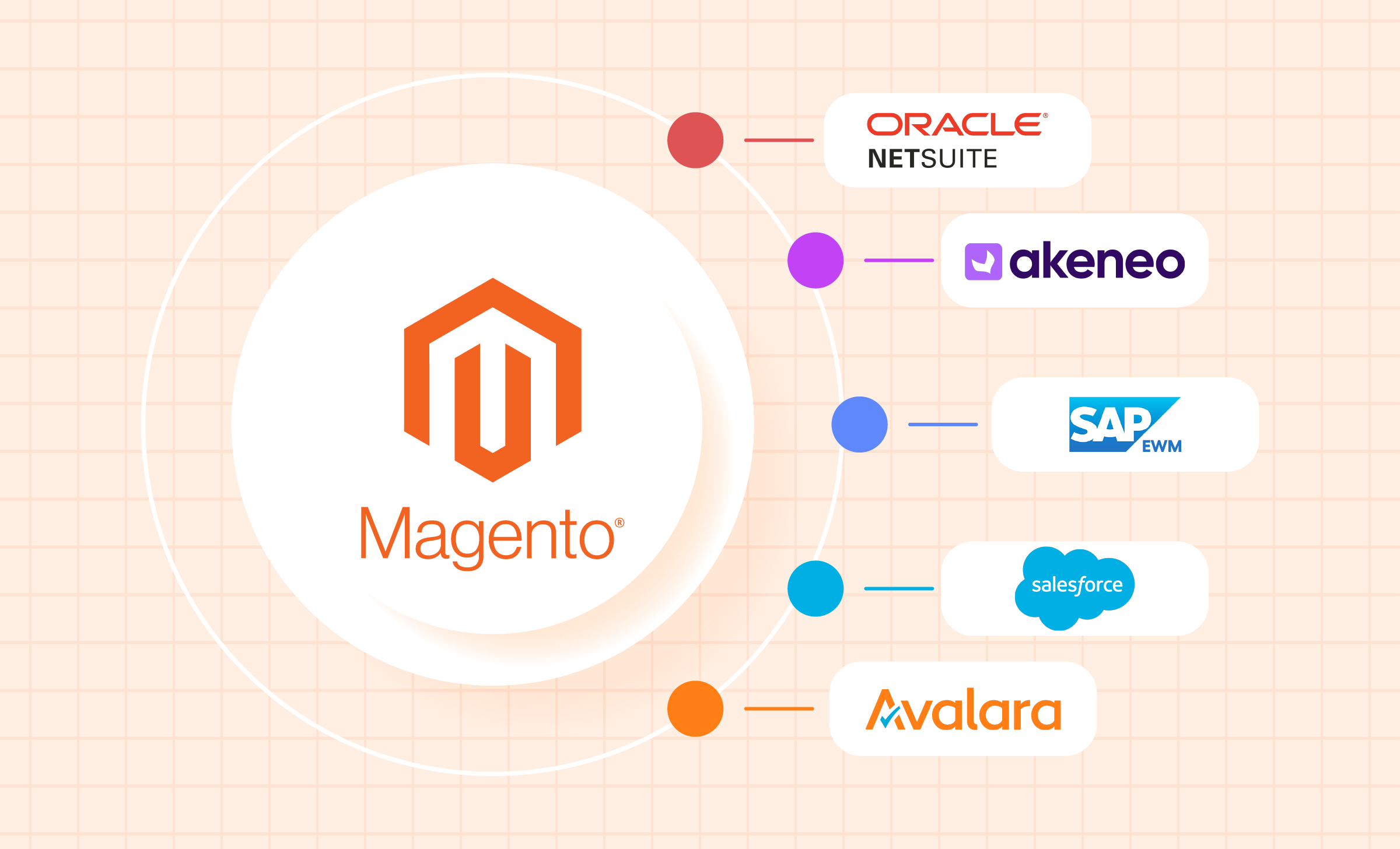
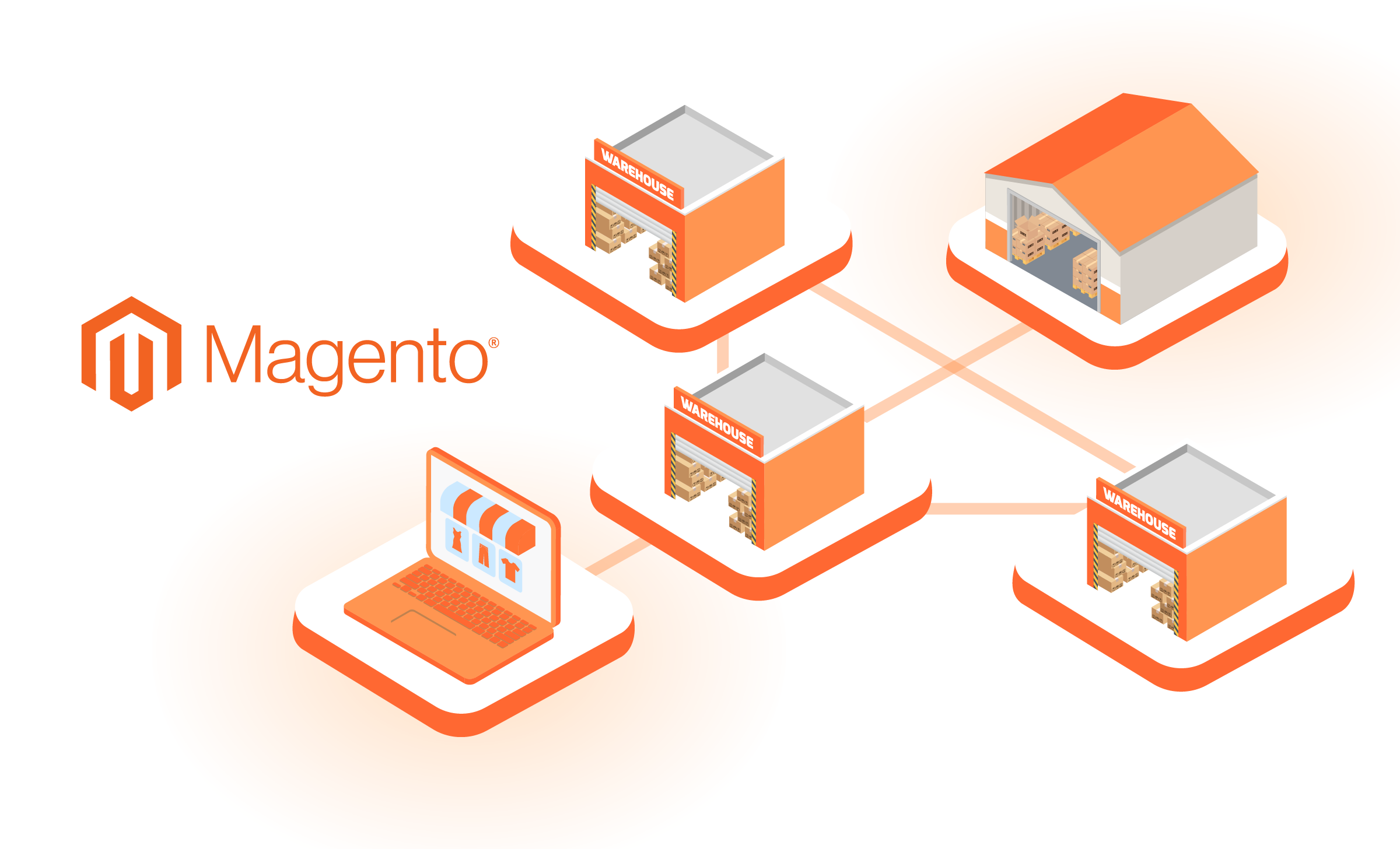
This integration-first model allows Mini Programs to function as a WeChat-native interface on top of existing systems, reducing development overhead while accelerating time to market. TMO’s Mannatech project shows how a WeChat Mini Program can integrate directly with a brand’s commerce platform without replacing core infrastructure:

Mini Programs as a Core Pillar in Cross-Border Strategy
The data and examples discussed above point to a clear shift in how Mini Programs are being used outside mainland China. They are no longer limited to experimentation or branding presence. For many sectors, they function as a core transaction and service layer for engaging Chinese users abroad.
In practice, Mini Programs tend to sit alongside existing digital assets rather than replacing them. Their role is distinct: capturing high-intent Chinese demand within the WeChat ecosystem, where identity, payment, and discovery are already integrated.
This positioning is especially relevant for cross-border scenarios where:
- User intent is time-sensitive (travel, transport, booking)
- App installation is a barrier
- Payment completion is critical
- Trust and familiarity influence conversion
At TMO, we work with brands and service providers to design and develop WeChat Mini Programs specifically for cross-border use cases, including travel, booking, local services, and commerce. Our focus is not just on building Mini Programs, but on ensuring they fit coherently within a broader eCommerce and digital strategy targeting Chinese users overseas.
- Clear alignment with user entry points inside WeChat
- Payment and authentication flows designed for overseas users
- Integration with existing systems and operational processes
- UX decisions that reflect Chinese user expectations rather than direct web or app translations
Planning to use WeChat Mini Programs as part of your cross-border strategy? Contact TMO to assess feasibility, prioritise the right flows, and integrate Mini Programs into your existing backend systems.