



During major shopping events, advertising budgets rise and click-through rates may look promising, yet eCommerce sales often fail to grow as expected. This is a common challenge for brands selling internationally during Black Friday, Cyber Monday, Christmas, and other year-end promotions.
According to Triple Whale, during Black Friday and Cyber Monday (BFCM) 2025, Meta advertising CPM (cost per thousand impressions) increased by nearly 8% year over year, while Google Ads cost per conversion rose by 34.18%. As clicks become more expensive, every point of friction after the click becomes more costly.
When advertising performance falls short, marketing teams often focus on refining audience targeting, refreshing ad creatives, or increasing budgets. However, one critical question is frequently overlooked: Does the landing page actually meet the purchase intent of the users who click the ad?
The following five checks can help you identify opportunities to optimize your landing pages and get more value from your holiday advertising campaigns.
1. Does Your Landing Page Deliver on the Promises Made in Your Ads?
The first and most fundamental check is whether users can immediately find the offers, products, and selling points they saw in the ad after arriving on the landing page.
Imagine an ad promoting "Up to 40% Off Sitewide for Black Friday." After clicking, users arrive on the brand's homepage, where they must search for the promotion themselves. This forces potential customers to spend additional time looking for what originally motivated them to click.
Google Ads also recommends maintaining strong relevance between ads, keywords, and landing pages. For example, if an ad promotes a 20% discount on a particular product category, users should be able to find and purchase the discounted products directly on the landing page.
During holiday campaigns, brands should look beyond whether the ad and landing page use similar wording. The entire post-click experience should feel consistent.
- Promotional message: Are the discounts, free gifts, and free shipping offers advertised in the ad clearly visible above the fold?
- Product relevance: Can users immediately find the products, collections, or bundles featured in the ad?
- Visual consistency: Do the landing page imagery and campaign theme align with the ad creative, so users know they have reached the right destination?
- Purchase journey: If the ad encourages users to "Shop Now," does the landing page provide a clear path to the relevant products instead of requiring registration or subscription first?
McAfee Improved Ad-to-Landing-Page Consistency, Increasing ROAS by 16%
Cybersecurity brand McAfee worked with FG Agency to improve consistency between its paid ads and landing pages. The team aligned landing page copy, promotional offers, product messaging, and visuals with different ad variations, while also improving page speed and simplifying checkout.
Following these combined optimizations, landing page conversion rates increased by 11% and paid advertising ROAS improved by 16%, without additional ad spend. While the gains cannot be attributed solely to message alignment, the case highlights the value of a consistent post-click experience.
Source: FG Agency, McAfee Case Study
2. Are Promotional Prices, Terms, and Deadlines Clearly Communicated?
Holiday ads frequently highlight "Limited-Time Offers," "Extra Discounts," or "Free Gifts with Purchase." However, purchasing decisions often depend on more specific details.
Which products qualify for the promotion? Is the discount applied automatically? Is there a minimum spending requirement? How are shipping costs and taxes calculated?
Research from Baymard Institute found that more than 18% of eCommerce websites have at least one issue with how discounts are displayed. Common problems include promotional information appearing too far from the product price, insufficient price visibility, and unclear presentation of discount amounts or percentages.
While these issues do not occur exclusively on landing pages, failing to communicate important conditions early can push uncertainty further down the funnel. At a minimum, holiday promotional landing pages should help users answer three questions.
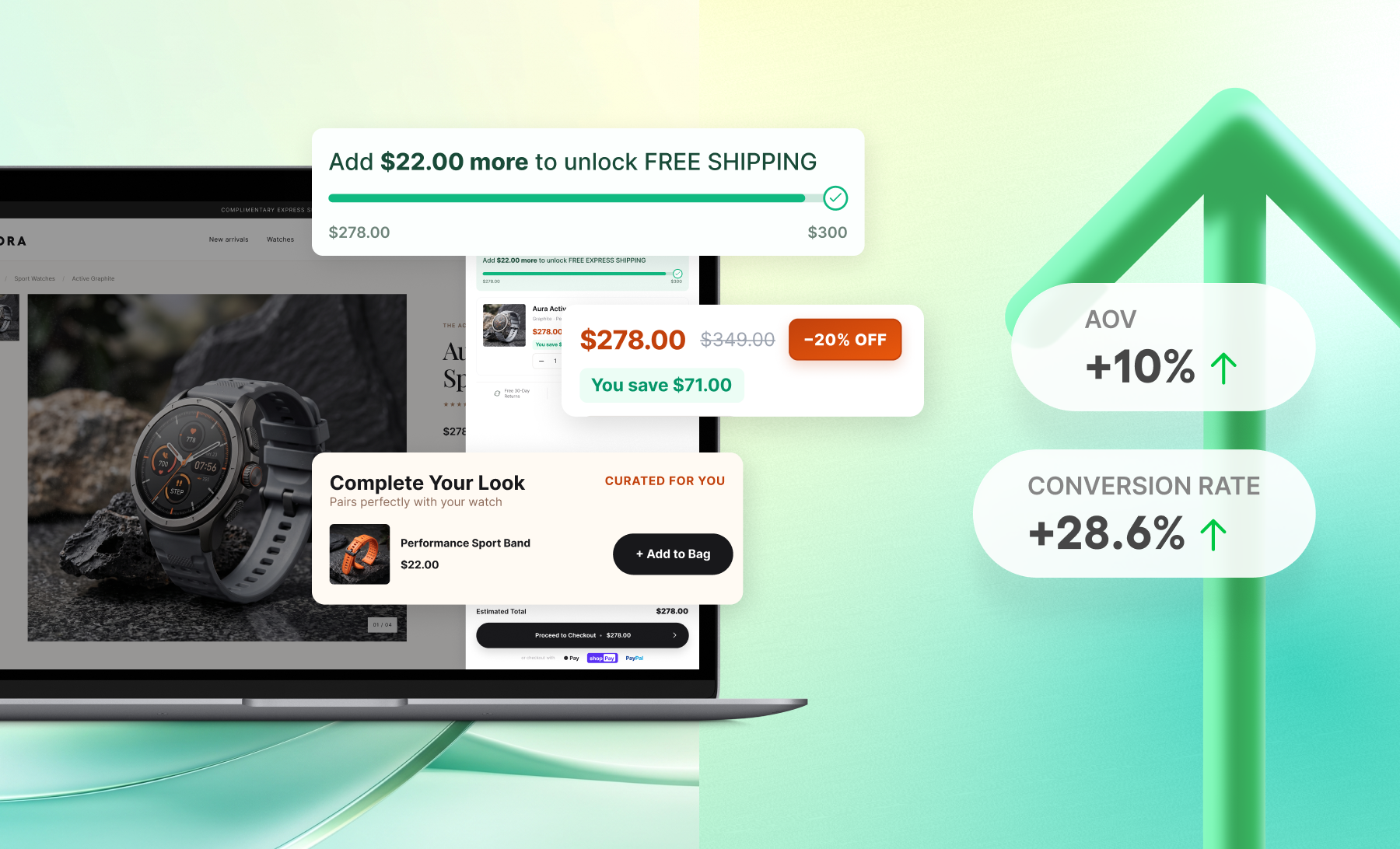
First, how much are they actually saving? The current price, original price, and discount amount or percentage should be clearly displayed. If a promotional code is required, explain how to apply it. Consider automatically applying eligible discounts to reduce steps.
Second, what are the conditions for receiving the offer? Minimum purchase requirements, eligible products, excluded categories, and whether discounts can be combined should all be accessible before users make their purchasing decisions.
Third, when does the promotion end? Campaign deadlines, time zones, and eligible regions should be communicated consistently. This is particularly important for cross-border eCommerce websites, where an offer may have started or expired while the localized landing page still displays outdated information.
Laura Geller Beauty Increased Paid Traffic Revenue by 15.9% with Automatic Discounts
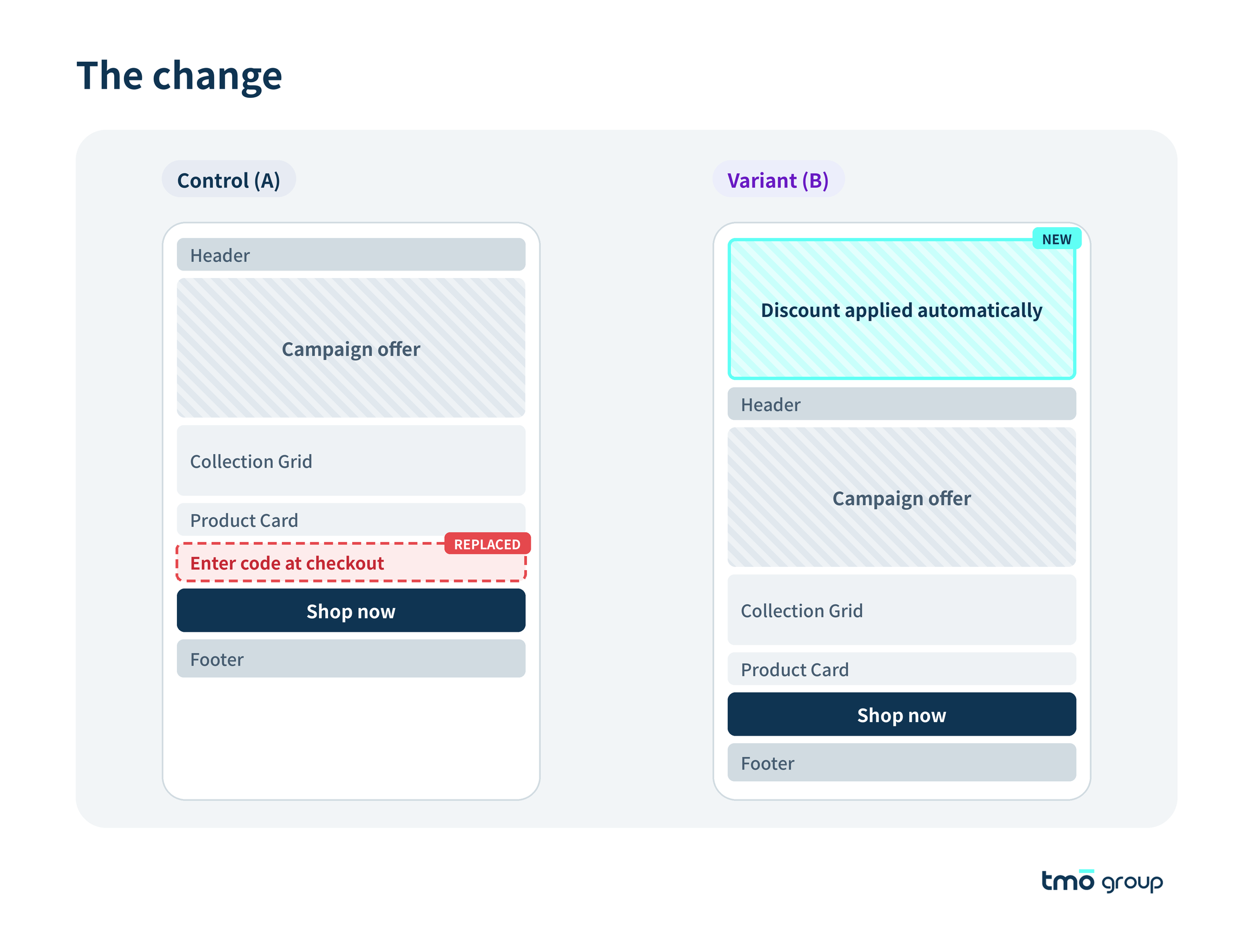
US beauty brand Laura Geller Beauty partnered with Visually to test a simpler promotional experience for paid ad visitors. Instead of requiring shoppers to enter discount codes at checkout, the brand automatically applied eligible discounts and displayed a prominent banner confirming the offer.
The A/B test reported a 15.9% increase in revenue from paid traffic, demonstrating how clearly communicating and applying advertised offers can reduce friction between ad clicks and purchases. The publicly available case does not disclose the full sample size or statistical significance.
Source: LiftArchive, Laura Geller Beauty Case Study
3. Are Different Audiences Directed to the Right Pages?
During peak shopping periods, brands run campaigns across Google Search, Google Shopping, Meta, TikTok, and other channels. These campaigns reach audiences with different levels of purchase intent.
Someone searching for "running shoes Black Friday deals" may be ready to compare products and prices. A shopper discovering a brand through a social media lifestyle ad may first need product information and trust signals.
Sending both audiences to the same generic promotional page may not meet their needs.
| Ad Traffic Type | Primary User Need | Recommended Landing Page |
|---|---|---|
| Branded search | Find brand promotions quickly | Brand holiday campaign page |
| Product or category search | Compare products, prices, and availability | Relevant product or category page |
| Cold audience social ads | Understand product value and brand credibility | Product-focused landing page |
| Remarketing | Continue a previous purchase journey | Previously viewed product or relevant collection |
| Existing customer offers | Redeem exclusive benefits | Dedicated offer page or page with pre-applied discounts |
There is no universal landing page strategy. The goal is to help each audience find relevant information with minimal effort.
For brands managing multiple campaigns and large product catalogs, an ad-to-landing-page mapping document can help identify incorrect redirects, expired promotions, unavailable products, and messaging inconsistencies.
A high click-through rate does not necessarily mean high-quality traffic. If an ad group generates strong clicks but weak product engagement, add-to-cart rates, or purchases, review whether its landing page matches user intent.
For more insights, read:
4. Can Mobile Users Easily Find Products and Complete Purchases?
A landing page that looks polished on desktop may still create friction on mobile, especially for shoppers arriving through social media ads.
Google Ads recommends mobile-friendly landing pages and faster loading speeds. Google has also reported that, in a retail research context, a one-second mobile page delay could affect conversions by up to 20%. This is not a universal estimate for every eCommerce website.
During holiday campaigns, large banners, countdown timers, promotional popups, chat widgets, and third-party scripts can slow pages or interfere with shopping.
Check the following:
- Are promotions, featured products, and shopping entry points visible above the fold?
- Are product options, quantity selectors, and add-to-cart buttons easy to use with one hand?
- Do popups or floating widgets obstruct prices or purchase buttons?
- Can shoppers clearly confirm an item was added to their cart and proceed to checkout?
- Does the page work across devices, browsers, and advertising platforms' in-app browsers?
Google's Core Web Vitals provide useful technical benchmarks.
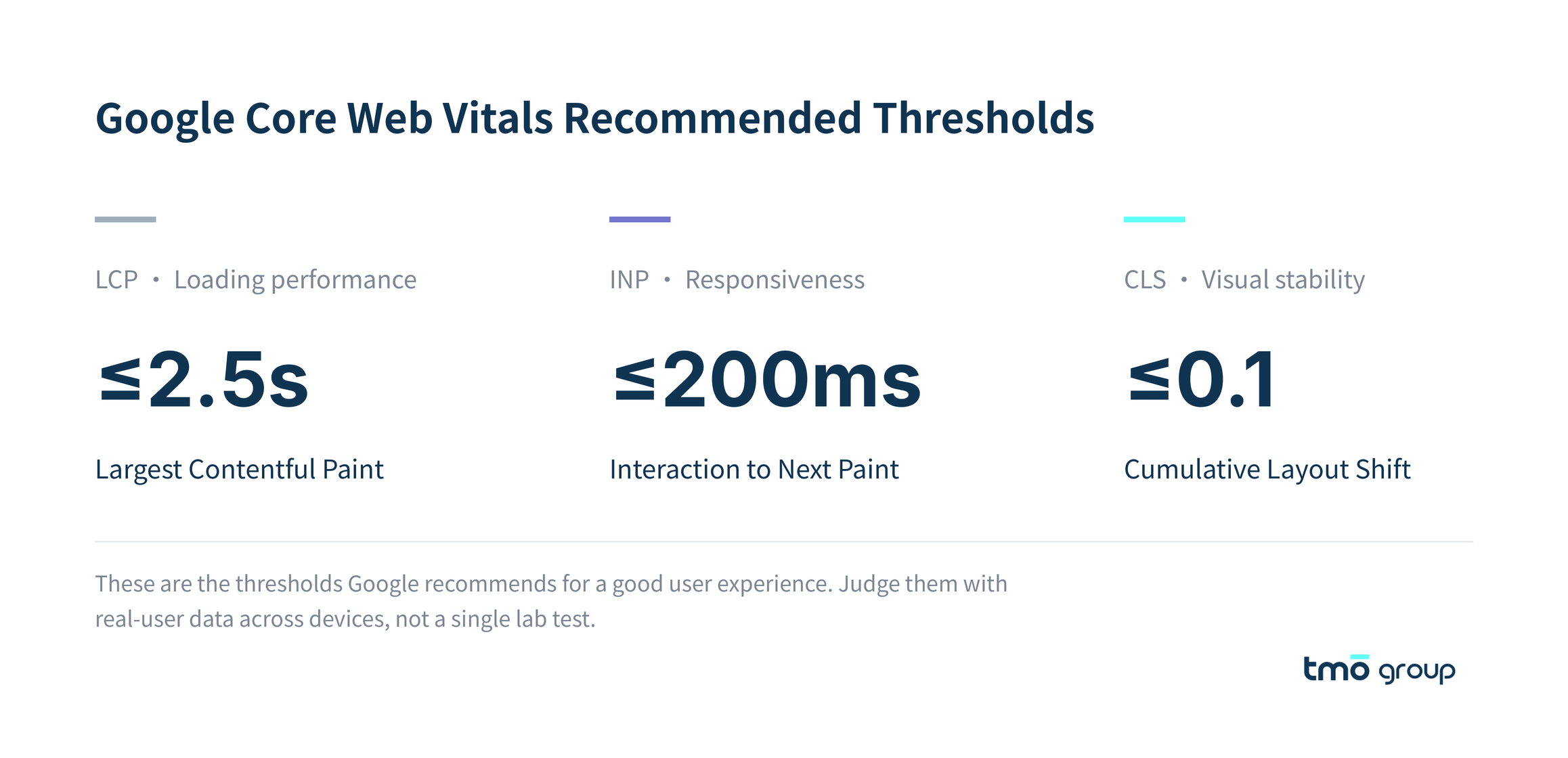
Optimizing performance does not mean removing every promotional feature. Instead, identify which elements support conversions and which introduce unnecessary friction.
For example, countdown timers can communicate urgency, but frequent layout shifts or multiple popups appearing before users see the products may undermine the shopping experience.
5. Can You Track Where Ad Traffic Drops Off?
The final check is whether your analytics can identify where visitors abandon the purchase journey.
Are users leaving immediately after landing? Viewing products without adding them to their carts? Or abandoning checkout after adding items?
Each issue requires a different solution, making conversion funnel tracking essential.
| Funnel Stage | Key Metrics | Potential Issues |
|---|---|---|
| Ad Click → Landing Page | Landing page views, engaged sessions | Loading failures, redirects, page performance |
| Landing Page → Product View | Product click-through rate, view_item | Traffic and content mismatch |
| Product View → Add to Cart | Add-to-cart rate | Pricing, product information, offers, purchase buttons |
| Add to Cart → Checkout | Checkout initiation rate | Shipping, discount rules, cart friction |
| Checkout → Purchase | Checkout completion rate | Payment, delivery, forms, checkout UX |
Brands using GA4, Google Ads, Meta Pixel, or server-side tracking should verify that events fire correctly, without duplication or missing data, and that reporting definitions are consistent.
Advertising platform conversions and website analytics purchases may differ due to attribution windows, cross-device activity, consent settings, and tracking methods.
Rather than relying on one metric, evaluate ROAS and Cost per Acquisition (CPA) alongside purchase conversion rate, Revenue per Session (RPS), and funnel performance.
6. Turn These Checks into an Actionable CRO Plan
Not every issue identified during an audit needs immediate attention.
For established eCommerce brands operating across multiple markets, languages, campaigns, and product catalogs, changing every landing page before peak season can be costly and risky.
Prioritize improvements based on traffic volume, potential conversion impact, and implementation effort.
| Check Area | Priority Signal | Recommended Action |
|---|---|---|
| Ad consistency | Ad offers do not match landing pages | Correct redirects and above-the-fold messaging |
| Promotion clarity | Unclear terms or inconsistent prices | Standardize prices, conditions, and deadlines |
| Traffic relevance | High clicks but low product engagement | Align ad creatives with landing page content |
| Mobile experience | Low mobile add-to-cart rates | Fix loading, obstruction, and usability issues |
| Conversion tracking | Unclear funnel drop-offs | Audit tracking events and monitor funnel performance |
Start with obvious issues such as broken redirects, invalid discount codes, or obstructed mobile purchase buttons.
For changes involving layouts, promotional messaging, or purchase flows, use A/B testing where traffic allows. Define success metrics in advance and avoid changing too many variables simultaneously.
Ultimately, holiday CRO is not simply about increasing button clicks. It is about generating more purchases from existing advertising budgets and building insights that improve future campaigns.
TMO Group: Turn More Holiday Ad Clicks into Orders
Underperforming holiday campaigns are not always caused by advertising itself. Inconsistent messaging, unclear promotions, and mobile shopping friction can prevent brands from realizing the full value of paid traffic.
For established cross-border eCommerce businesses, improving advertising efficiency means understanding where and why visitors drop off after clicking an ad.
TMO Group's Holiday Season Conversion Rate Optimization (CRO) Service helps brands identify conversion barriers across landing pages, product detail pages, shopping carts, and checkout flows, then implement improvements based on business impact and priority.
Through CRO audits, optimization implementation, and a 30-day performance review, TMO Group helps brands evaluate results and identify further opportunities to improve conversions, supporting both peak-season performance and long-term eCommerce growth.

Frequently Asked Questions
High click-through rates indicate strong ad engagement, but purchases can still be lost due to mismatched landing page messaging, unclear promotions, poor mobile experiences, or complicated checkout processes.
Choose based on ad messaging and purchase intent. Brand-wide promotions generally suit dedicated campaign pages, product-specific ads should lead to relevant product pages, and remarketing should help users resume their shopping journey.
Focus on ad-to-page consistency, promotional clarity, traffic relevance, mobile shopping experience, and conversion tracking. Prioritize improvements according to traffic volume, funnel performance, and implementation costs.
TMO Group provides CRO audits, prioritized optimization implementation, and a 30-day performance review to identify conversion barriers, evaluate improvements, and recommend next steps for continuous optimization.