



The global Pet Care market is valued at approximately US $243.5 billion (2025) and is projected to reach US $483.5 billion by 2035, growing at a CAGR of 7.1%. Interestingly, even during economic downturns, only 19% of pet owners trade down on pet products, compared to 47% for groceries:
"Pet spending is deeply emotional, and that emotion drives remarkable purchase intent."
But that does not automatically mean strong conversion. The average conversion rate in pet care eCommerce sits between 2.56% and 2.75%, with high-ticket categories like automatic litter boxes and smart feeders often performing below that benchmark. The more emotionally invested pet owners are, the higher their standards for brand authenticity and product differentiation.
Based on our conversion rate analysis of premium pet D2C stores, here are 5 conversion problems worth addressing first.
As part of our Conversion Optimization Program, TMO is selecting a limited number of D2C brands for a zero-cost diagnostic audit and optimization roadmap.
1. Brand Storytelling Doesn't Create an Emotional Connection
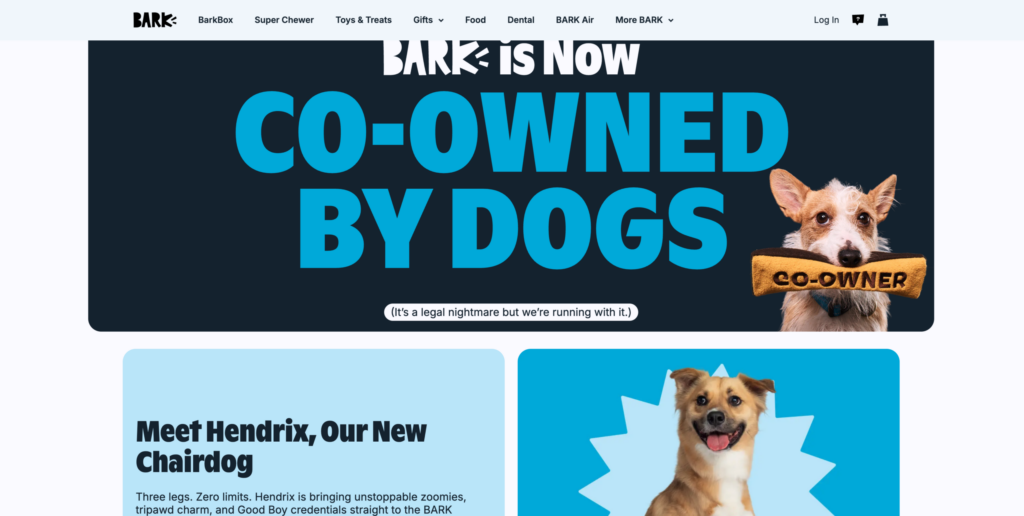
More than just buying a product, premium pet consumers are buying into a brand's understanding of how animals should be treated. A genuine brand story creates an emotional connection that, once established, is remarkably hard for competitors to break.
For emotionally-invested and loyal audiences, it is surprisingly common to D2C websites telling their story in a plain way: a founder bio, a mission statement, a few polished product shots, and a generic line like "the best care for every pet." That is not a story.
BARK (BarkBox) does it better: Every piece of their marketing is built around real emotional moments between dogs and their owners. They flaunt "co-owned by dogs" and a "Chairdog" on their site, and they repurpose authentic unboxing videos from real customers into ads, social content, and email campaigns. The result is a subscriber retention rate approaching 95%.
Emotional connection is built through specific, visible brand behavior. From homepage to product pages, new visitors are not exactly looking to answer "who are we?" but rather "what relationship do we have with your pet that no one else can offer?". This can show up as:
- A founder's specific origin story, not a generic mission statement
- Contextual customer reviews embedded in product pages, with real scenarios
- Design rationale that reveals genuine understanding of animal behavior, for example, explaining why a litter box is shaped the way it is
- Emotion-triggering visuals: Small “aww” moments that make the emotional payoff visible, like pets reacting to the product or owner-pet rituals.
Note that primary drivers of trust vary across industries and categories. While Pet eCommerce is highly emotion-driven, others such as Lifestyle & Fashion are branding-led:
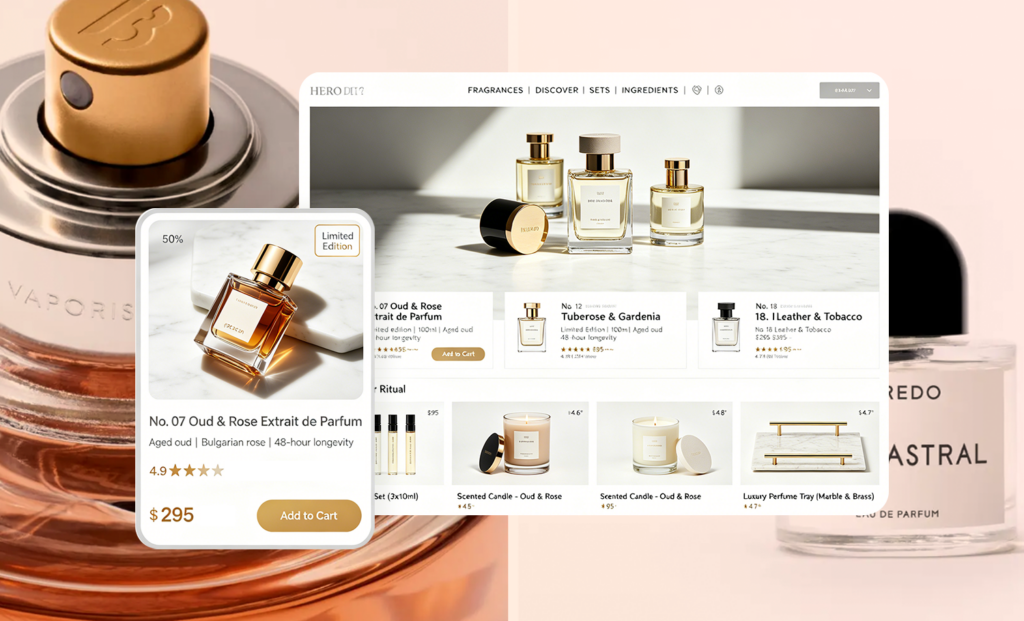
2. Product Differentiation is Unclear
The smart pet device market is intensely competitive. The global smart pet feeder market alone was valued at US $2.31 billion in 2024 and is projected to grow to $5.71 billion by 2032 (CAGR 11.4% to 15%). With that many options available, the core purchase question is "why your brand and not another?"
If you aspire to answer that question clearly, here are some things to avoid:
- Spec-first pages instead of differentiation-first pages: Capacity, sensor count, battery life, and app compatibility are features every competitor also lists. Customers can read all of them and still not know why to choose yours.
- The core difference versus competitors is not clearly stated: Brands may know internally that their sensor accuracy is superior or their odor control technology is patented, but that advantage is never translated into language that creates purchase preference.
- High-ticket products lack "why it's worth the price" explanation: A $300 automatic litter box sitting next to an $80 option needs a compelling on-page reason to justify the gap. If the feature lists look similar, customers default to the cheaper option.
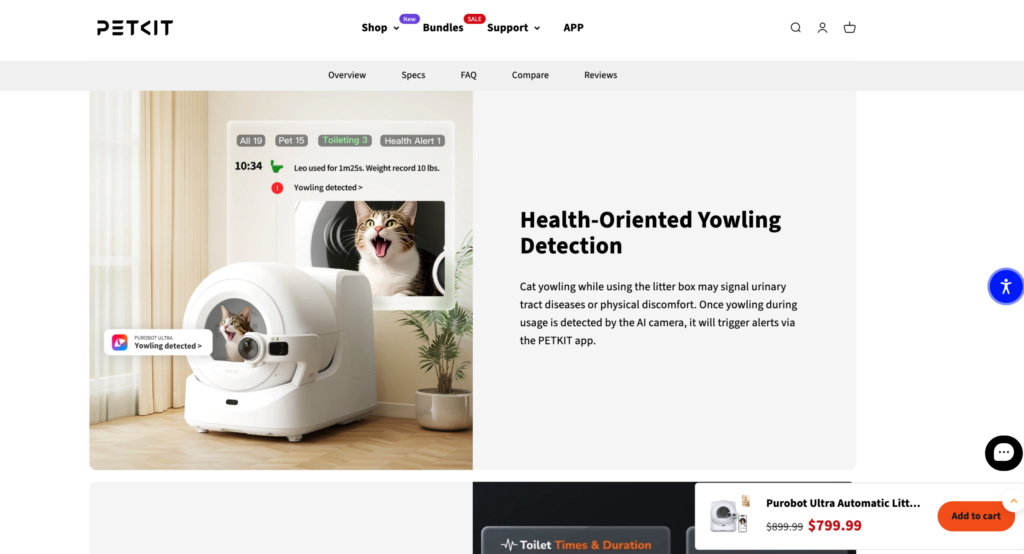
PETKIT's PUROBOT ULTRA offers a useful benchmark. Its differentiation is built around AI multi-cat recognition and health monitoring, communicated in concrete use value: "not just automated cleaning, but monitoring your cat's health through behavior and vocalizations." That is a specific, understandable reason to buy.
3. Product Pages Does Not Address the Right Concerns
A household with two cats and a household with one senior cat have completely different concerns when evaluating an automatic litter box. The first cares about multi-cat recognition, capacity, and durability. The second cares about noise levels, ease of entry, and what happens when the device malfunctions.
Trying to convert both with the same content typically converts neither. This shows up in a few specific ways:
- Generic FAQs: "How do I install it?" and "How do I clean it?" are useful. But "what if my cat refuses to use it," "could it trap my cat's paw," and "does it work during a power outage" are the questions that are more likely to create hesitation at checkout. If those concerns are not addressed before the buy button, they may become abandoned carts.
- Overly Idealized Visuals: Studio shots are less convincing than raw user footage showing how a hesitant cat actually adapts to the product
- Non-Intuitive Dimensions: "60cm x 55cm x 62cm" means little to a customer picturing their bathroom when not complemented by size comparisons with familiar objects, or placement diagrams for different room configurations, help customers complete that judgment directly.
It is also worth noting that pet purchase decisions are heavily influenced by veterinary recommendations. Content that speaks specifically to pet type, age range, or health condition is more persuasive than generic product descriptions.
4. Offer and Trust Signals are Misaligned
A first purchase of a premium pet product is a trust test. Customers are asking: does this brand understand pet care? Is this product safe? Has someone in a similar situation used it?
When those questions have not been answered by the page, a "limited-time discount, buy now" prompt does not drive conversion. It signals that the brand is substituting urgency for confidence.
The effective approach is to let trust signals appear before the offer, and to place them where they are actually needed. Specifically:
- Vet recommendations and safety certifications belong near the top of the product page or adjacent to the add-to-cart button, not buried in the "About Us" section.
- Customer reviews need to be visible at key decision points: A reviews module collapsed deep on the page, or one showing only an aggregate star rating without actual content, dramatically reduces their conversion impact.
- Promotions need to match the brand's positioning: Frequent deep discounts erode the perceived value of a premium product. More effective is tying an offer to a specific rationale: "first subscription price" or "includes a complimentary sample" makes the promotion feel like a gesture rather than a sign the original price was inflated.
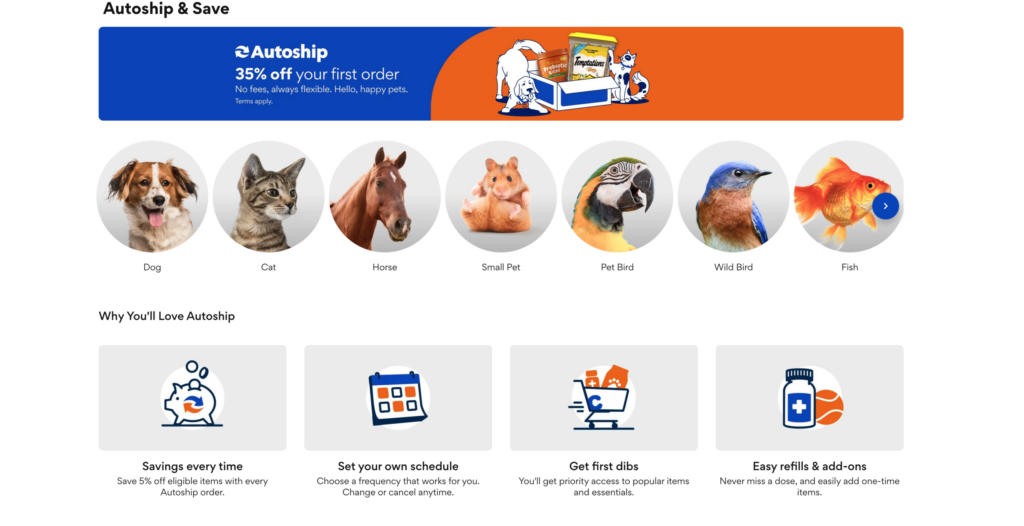
Chewy's Autoship subscription program generated 82.2% of the company's net sales in Q1 2025. Its strength is not the discount size but the subscription trust built on genuine service experience: customers know orders arrive on time and issues are resolved quickly. When an offer follows established trust, it closes the sale. When it precedes trust, it tends to be ignored.
5. Ineffective Display of User Reviews
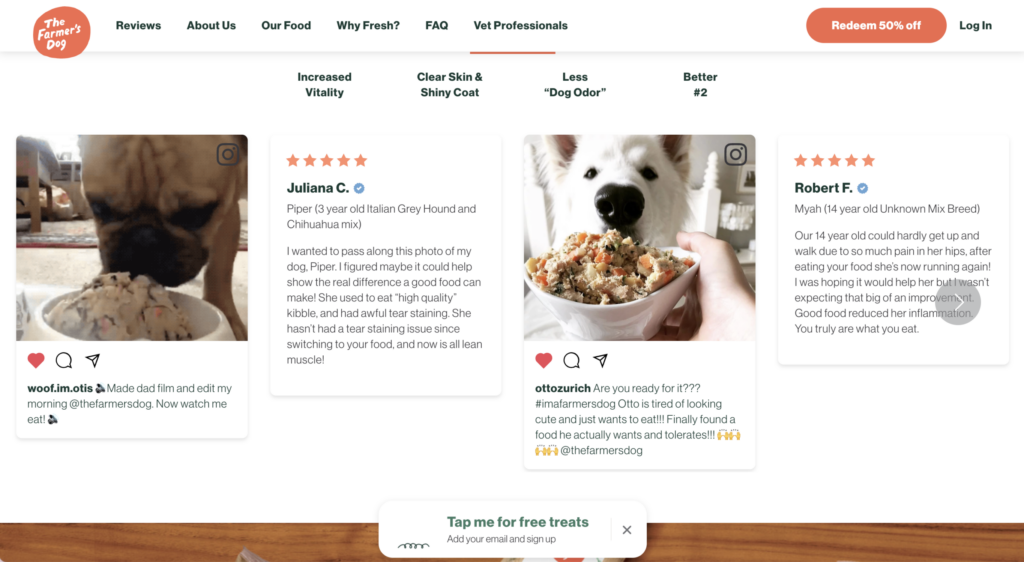
Premium pet product shoppers are researchers. Before buying a $300 product, many customers read dozens of reviews looking for people whose situation resembles their own.
Common gaps:
- Only aggregate ratings are displayed, with no filterable dimensions: A 4.8-star average tells customers that most people are satisfied. It does not tell a multi-cat household how the product performs in their specific situation. Enabling filters or keyword tabs within reviews, helps customers complete that judgment.
- Review content is dominated by subjective impressions rather than situational detail: "Great product!" and "my cat loves it" are not useful for decision-making. A review like "I have three adult cats, used it for two months, clean the waste drawer once a day, and the noise at night has never woken anyone up" provides specific context, a usage duration, and a measurable experience. That is the content worth featuring.
- Brands are not actively guiding customers toward useful reviews: Generic post-purchase emails asking for five stars produce generic responses. Emails that ask specifically "how long did your cat take to adapt?" or "what changed compared to your previous product?" produce reviews that actually help the next buyer decide.
The Farmer’s Dog excels here. Their post-purchase email sequences prompt customers to share specific changes in their pet's condition, including coat quality, digestion, and energy levels. That content is then integrated into product pages and ad creative, functioning as detailed, credible social proof.
TMO's New CRO Pilot Program for Emotion-driven Products
Pet product customers have higher lifetime value and stronger repeat purchase behavior than most retail categories. That means a first conversion is not just one order. It is the beginning of a long-term customer relationship, and the quality of that first experience determines how far it goes.
TMO Group is currently offering a zero-cost CRO Audit for eligible D2C stores. You will receive:
- Conversion Barrier Analysis: Locate where and why visitors drop off.
- UX & Usability Assessment: Identify friction points in the user journey.
- Annotated Screenshots: Visual breakdowns of key issues with clear explanations.
- Prioritized Action Roadmap: A plan sorted by impact and effort.
- Quick-Win Recommendations: Immediately actionable improvements.
If you want to identify the biggest friction points across your key pages and turn them into prioritized actions, you can learn more and apply for the pilot here:

Frequently Asked Questions (FAQ)
Because premium pet consumers have longer decision cycles. They evaluate whether a brand genuinely understands pet care and extensively research reviews, safety, and use scenarios for high-ticket items before committing.
Pet purchasing is inherently emotional, and consumers choose brands whose values align with their own. Authentic stories and specific brand behaviors build lasting trust more effectively than generic claims.
Customers care about the specific value a feature brings to their pet, not just the technical parameters. If a page cannot explain why a product fits a customer's specific situation, the feature list fails to provide a compelling reason to buy.
Frequent large discounts can undermine trust in product quality and brand value. Instead of slashing prices, tying offers to subscriptions or gifts preserves the brand’s premium positioning while still providing a conversion incentive.
Brands should proactively guide users to share specific feedback, such as adaptation time or health changes. Detailed reviews with real-world scenarios are more persuasive for new shoppers and more effective for remarketing.
Pet owners have high repeat purchase rates and long customer lifespans. Since a single first-time conversion compounds in value over time, optimizing the initial experience is an investment in a long-term relationship rather than just one transaction.