Prepare your commerce engine for multi-interface and AI-driven discovery
TMO helps brands structure the product data, content, feeds, governance, APIs, and measurement foundations needed for their products to be discovered, understood, and recommended across search engines, marketplaces, social channels, AI assistants, and emerging commerce interfaces.
TMO helps brands structure the product data, content, feeds, governance, APIs, and measurement foundations needed for their products to be discovered, understood, and recommended across search engines, marketplaces, social channels, AI assistants, and emerging commerce interfaces.
From understanding your current AI visibility and defining the foundations required for AI-driven commerce, to implementing new capabilities and continuously improving performance, TMO offers solutions for every stage of AI readiness.
UNDERSTAND
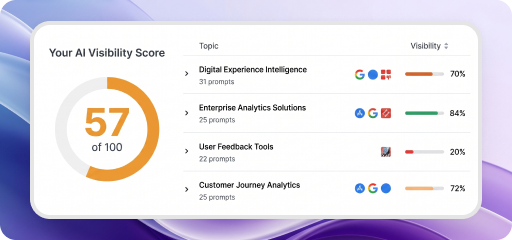
Visibility Scan
Benchmark how your brand and products appear across AI-mediated discovery and identify the most obvious visibility gaps.
TYPICAL DELIVERY
30–50 priority prompt checks
5–10 competitor benchmark
Core page, feed, and machine-readability review
DEFINE
Discovery & Readiness Sprint
Assess your system and catalog architecture to determine which AI capabilities are feasible now, what is missing, and what needs to change before implementation.
TYPICAL DELIVERY
AI discovery and channel-readiness audit
Product-data, schema, feed, and governance assessment
IMPLEMENT
AI Commerce Enablement
Build and deploy AI commerce features alongside the data, content, integrations, and measurement foundations they depend on.
TYPICAL DELIVERY
Schema, feed, and structured-content deployment
Product-data and taxonomy improvements
Analytics and AI-referral measurement setup
OPTIMIZE
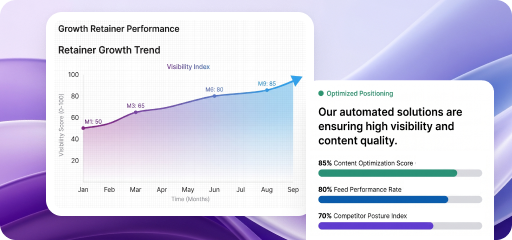
Growth & Optimization
Continuously improve AI visibility, content quality, feed performance, and competitive positioning as channels evolve.
Commerce architecture is becoming less website-centric as discovery and transactions increasingly take place across platforms.
AI Assistants & Agentic Interfaces
Enable products to be recommended and transacted through conversational AI systems and autonomous agents.
Merchant & Product Feeds
Maintain accurate, enriched feed data across Google, Meta, TikTok Shop, and emerging channel surfaces.
Mini Programs & Embedded Experiences
Power embedded purchase flows within third-party apps and platform-native mini commerce environments.
Marketplaces & Social Commerce
Ensure catalog data, pricing, and inventory are synchronized across marketplaces and social storefronts.
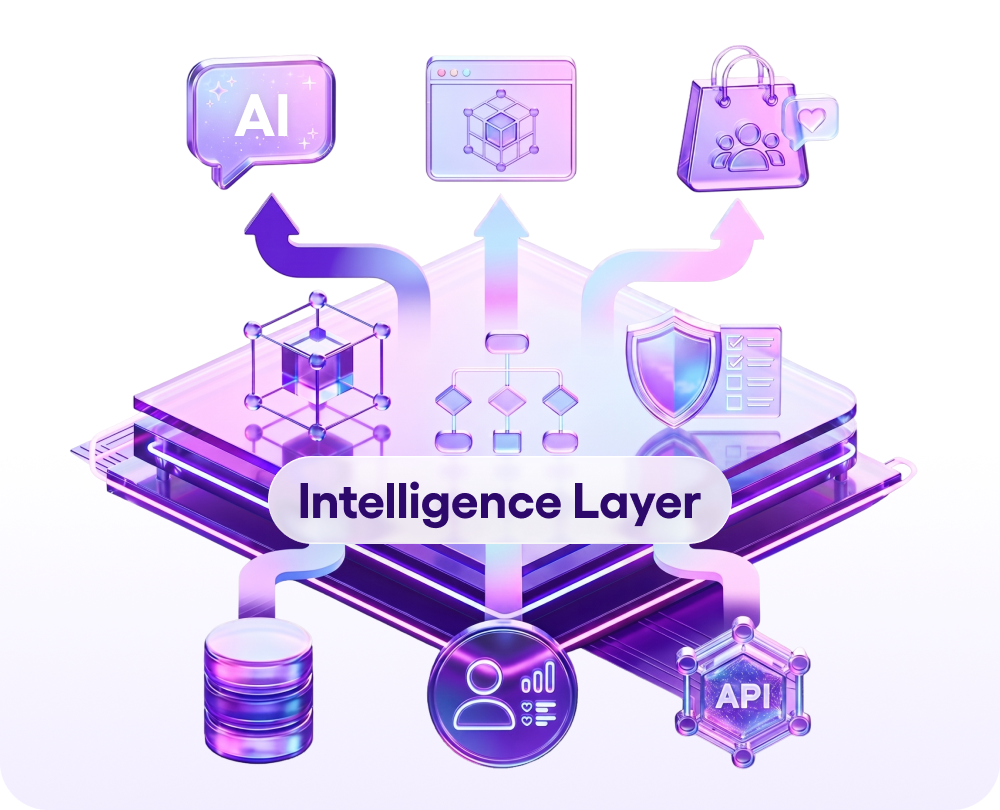
The Intelligence Layer for Modern Commerce
For systems to operate effectively across these environments, information must be more than visible to people. It must also be structured, machine-readable, accurate, governed, and available to external systems.
System-First Architecture
Capabilities are built as structured, modular systems that extend beyond any single storefront, channel, or platform.
Unified Commerce Data Layer
Product knowledge, customer signals, and transaction data are structured for AI consumption, governance, and accessibility.
Build the Foundations Behind Multi-Interface Commerce
Turn fragmented product information into structured knowledge that can support search, comparison, recommendations, feeds, and AI-assisted experiences.
Product Knowledge Structuring
Make products easier to interpret, compare, and recommend. Expose accurate product, inventory, price, and policy information through structured formats.
Product attributes and relationships
Taxonomy and classification
Compatibility and use-case data
Technical specifications
Accessories and replacements
Market availability
Delivery, warranty, and policy information
Visibility & Channel Readiness
Improve how products and brand information are exposed across traditional and AI-mediated discovery channels.
AI search visibility (GEO)
Product schema
Merchant and product feeds
OpenAI, Google, and Bing product-channel configuration
Multilingual content readiness
Technical SEO and JavaScript readability
AI referral tracking
Governance & Decision Logic
Define how commerce systems and AI interfaces should interpret, present, and act on business information.
Product and marketing claims
Compliance-sensitive content
Source and evidence requirements
Brand and policy rules
Customer and market permissions
Approval and escalation workflows
Human review boundaries
Data & Integration Architecture
Make commerce information accessible to websites, marketplaces, social platforms, assistants, and future channels through shared data architecture, APIs, adapters, and system integrations.
Product and content data architecture
Commerce APIs
PIM, ERP, CRM, and OMS connectivity
Feed and channel adapters
Permission boundaries
Inventory and pricing access
Agent and interface extension points
Measurement & Evaluation
Measure whether AI channels and interfaces are accurately representing the brand and contributing to commercial outcomes.
Brand mentions and citations
Prompt and topic coverage
Product recommendation visibility
Product-feed quality
Machine readability
AI referral traffic
Assisted conversion
Revenue attribution
Make products easier to interpret, compare, and recommend. Expose accurate product, inventory, price, and policy information through structured formats.
Product attributes and relationships
Taxonomy and classification
Compatibility and use-case data
Technical specifications
Accessories and replacements
Market availability
Delivery, warranty, and policy information
Improve how products and brand information are exposed across traditional and AI-mediated discovery channels.
AI search visibility (GEO)
Product schema
Merchant and product feeds
OpenAI, Google, and Bing product-channel configuration
Multilingual content readiness
Technical SEO and JavaScript readability
AI referral tracking
Define how commerce systems and AI interfaces should interpret, present, and act on business information.
Product and marketing claims
Compliance-sensitive content
Source and evidence requirements
Brand and policy rules
Customer and market permissions
Approval and escalation workflows
Human review boundaries
Make commerce information accessible to websites, marketplaces, social platforms, assistants, and future channels through shared data architecture, APIs, adapters, and system integrations.
Product and content data architecture
Commerce APIs
PIM, ERP, CRM, and OMS connectivity
Feed and channel adapters
Permission boundaries
Inventory and pricing access
Agent and interface extension points
Measure whether AI channels and interfaces are accurately representing the brand and contributing to commercial outcomes.
Brand mentions and citations
Prompt and topic coverage
Product recommendation visibility
Product-feed quality
Machine readability
AI referral traffic
Assisted conversion
Revenue attribution
Frequently Asked Questions (FAQ)
Not primarily. TMO can work across Shopify Plus, Adobe Commerce (Magento), headless, and other commerce architectures. AI readiness depends more on whether product information, pricing, inventory, policies, feeds, APIs, and measurement are structured and accessible to the systems that need them.
GEO (Generative Engine Optimization) focuses on improving how content and brand information can be understood and surfaced by generative search systems. AI search visibility describes how often and how accurately a brand or its products appear in AI-generated answers and recommendations. AI commerce readiness is broader, covering the data, content, feeds, APIs, governance, and measurement foundations needed to support AI-driven discovery and commerce.
Improving AI visibility starts with understanding where and how the brand currently appears, then addressing gaps in content clarity, product information, structured data, schema, feeds, technical accessibility, and authority signals. TMO can benchmark priority prompts and competitors, identify visibility gaps, and build a roadmap for ongoing GEO and AI discovery optimization.
AI systems need reliable, machine-readable information to understand products and compare attributes such as price, availability, specifications, compatibility, variants, and policies. Product schema, merchant feeds, and well-structured catalog data make this information easier for search engines, shopping platforms, and AI assistants to interpret and use consistently.
A readiness assessment examines the foundations required for AI-driven discovery and commerce, including product data and taxonomy, structured content, schema, merchant feeds, APIs and integrations, governance, technical accessibility, analytics, and AI-referral measurement. The goal is to identify what is already usable, what is missing, and what should be prioritized before implementation.
Preparing for agentic commerce requires making key commerce capabilities available beyond the website itself. This includes structured product knowledge, reliable pricing and inventory data, accessible APIs, transaction and fulfilment services, permission controls, governance, and measurement so AI assistants and other interfaces can safely discover products, support decisions, and eventually interact with commerce workflows.
We use cookies to enhance your browsing experience, serve personalized ads or content, and analyze our traffic.
Functional
Always active
The technical storage or access is strictly necessary for the legitimate purpose of enabling the use of a specific service explicitly requested by the subscriber or user, or for the sole purpose of carrying out the transmission of a communication over an electronic communications network.
Preferences
The technical storage or access is necessary for the legitimate purpose of storing preferences that are not requested by the subscriber or user.
Statistics
The technical storage or access that is used exclusively for statistical purposes.The technical storage or access that is used exclusively for anonymous statistical purposes. Without a subpoena, voluntary compliance on the part of your Internet Service Provider, or additional records from a third party, information stored or retrieved for this purpose alone cannot usually be used to identify you.
Marketing
The technical storage or access is required to create user profiles to send advertising, or to track the user on a website or across several websites for similar marketing purposes.